Every supplement brand selling on Amazon now faces a new compliance requirement, and being FDA-compliant is no longer enough to meet it. As of 2026, Amazon has officially expanded its supplement compliance requirements and this time it applies to every seller, not just high-risk categories. But will this trigger widespread delistings for supplement products across the platform?
Now, all dietary supplements sold on Amazon’s US marketplace must demonstrate cGMP compliance verified by an Amazon-approved third-party Testing, Inspection, and Certification (TIC) organization.
We’ll break down what changed, share our perspective on what this signals for the industry, and walk through what brands selling supplements on Amazon should be thinking about right now.
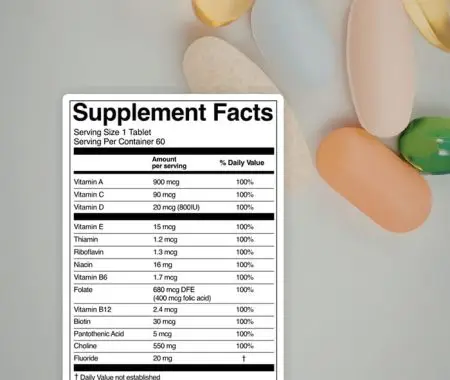
Looking to create a supplement facts label for your product? Book a demo or hire one of our regulatory experts who can create a fully FDA-compliant label for you
TL;DR:
Every dietary supplement sold on Amazon’s US marketplace now requires third-party cGMP certification through an Amazon-approved TIC provider. This applies to all supplement categories, not just high-risk ones. Sellers who fail to meet the new 21 CFR 111 compliance standards risk listing suppression, Amazon delisting, and lost revenue. Here is what you need to know and do.
Amazon’s Dietary Supplement Seller Requirements in 2026
As of 2026, Amazon requires all dietary supplement sellers on its US marketplace to meet a comprehensive set of compliance standards — covering everything from listing content and product images to third-party cGMP certification and testing. These requirements are outlined on Amazon’s Dietary Supplements policy page on Seller Central and apply to every supplement category without exception.
Here’s a complete breakdown of the current Amazon supplement listing requirements.
Amazon Dietary Supplement Requirements: Complete Breakdown
| Requirement Area | What Amazon Requires |
| Listing Attributes | Item name with the name of the dietary supplement, manufacturer name, brand name, ingredients list, and unit count (e.g., 100 tablets, 5mg, 6 oz). |
| Product Images | The full product label in English must be visible, including:
Images must not include the FDA logo. |
| Claims Restrictions | Listings and images must not:
Additionally, extract or ingredient weight claims must match the Supplement Facts panel exactly:
Non-GMO claims require supporting documentation—either a Non-GMO Project Verified certificate, PCR lab test results, or USDA Organic certification. |
| Offers | Products listed as “New” must be sealed in the original manufacturer’s packaging. |
| Certifications (All Dietary Supplements) | All products must be manufactured in a facility with a valid, non-expired third-party cGMP certification under 21 CFR 111 or 21 CFR 117. Accepted cGMP programs include:
GFSI-benchmarked standards that address 21 CFR 111 or 117 are also accepted:
International equivalents accepted:
Private audits, first-party audits, consulting audits, and FDA inspections will not be accepted. |
| Testing (High-Risk Categories Only) | Dietary supplements in the bodybuilding, joint health, sexual enhancement, sports nutrition, and weight management categories must meet additional testing requirements:
|
| Third-Party TIC Requirement | All sellers must work with an Amazon-approved TIC provider to either test their products or validate existing testing documents. Direct submission of testing documentation from sellers to Amazon is no longer accepted. |
| Documentation Standards | All documentation and images submitted must meet the following:
|
What’s New in Amazon’s 2026 Supplement Seller Policy
This isn’t the first time Amazon has required cGMP compliance for supplements – in 2024, Amazon introduced third-party cGMP verification requirements only for high-risk supplement categories — sexual enhancement, weight management, and sports nutrition. Those categories served as a testing ground for what would come next.
The 2026 update expands the cGMP certification requirement to all dietary supplement categories — whether you’re selling vitamins, botanicals, amino acids, or mineral blends. The same 21 CFR 111 compliance standards now apply across the board.
A few details that aren’t captured in the table above but are important to understand:
- You’ll have a 90-day window: Once Amazon contacts you, sellers typically have 90 days to submit their cGMP verification through an approved TIC provider.
- A Fast-Track option exists. Amazon has introduced a Fast-Track Compliance Program for products already certified by select partners, including BSCG, Clean Label Project, GRMA, Informed Choice, NSF, and USP. If your product is already certified through one of these organizations, Amazon may validate your compliance automatically.
- Direct submissions are no longer accepted. This process replaces direct submission of testing documentation from sellers to Amazon. Everything now flows through a TIC provider.
- The rollout has been phased. Amazon updated its Dietary Supplements policy page on Seller Central, informed industry groups like the American Herbal Products Association (AHPA) in late 2025, and hosted seller-facing webinars and Q&A sessions through Seller Central forums. Amazon was reaching out to sellers in waves rather than enforcing everything at once.
“The Supplement Facts panel has effectively become the single source of truth for your entire Amazon presence,” says Rachelle, MSc, LDN,Regulatory Affairs Lead at Food Label Maker. “Your listing content, your product images, your claims, and your compliance review all flow from it. If your Supplement Facts panel is inaccurate, everything downstream, from your listing copy to your TIC verification, is at risk.”
What Supplements Are Prohibited on Amazon?
Amazon also maintains a clear list of dietary supplement products that are outright prohibited from its marketplace. According to Amazon’s Dietary Supplements policy, the following products cannot be listed or sold:
- Supplements named in an FDA recall or safety alert
- Misbranded supplements or those with false or misleading label information
- Supplements flagged by the FTC for untrue marketing claims
- Supplements identified in an FDA warning letter
- Products containing controlled substances, including CBD, Schedule I–V substances, and DEA “List I” chemicals
- Products containing unapproved drug or prescription-only ingredients — specifically peptides like BPC-157, Dihexa, DSIP, GHRPs, Ipamorelin, Melanotan, PT-141, SLU-PP-332, TB-500, Tesamorelin, and CJC-1295
- GLP-1 receptor agonists
- Skin patches marketed as dietary supplements or detox products
- Adulterated supplements
This list is not exhaustive as Amazon reserves the right to remove any product it deems unsafe, illegal, restricted, or prohibited, and may request additional information to verify product safety and compliance at any time.
“A marketplace with clearer guardrails benefits brands that are doing things the right way,” says Maria, Founder & CEO of Food Label Maker. “The brands most likely to be affected are those that have been operating in gray areas. These tighter restrictions help ensure that quality products aren’t competing against non-compliant ones for the same shelf space.”
See How FoodLabelMaker Can Help You
Is FDA Compliance Enough to Sell Supplements on Amazon in 2026?
Being FDA-compliant alone is no longer enough to sell dietary supplements on Amazon, because Amazon’s 2026 supplement update policy sets its own compliance standard that exceeds what federal regulators require in several key areas:
Amazon’s Third-Party cGMP Audit Requirement
- The FDA requires supplements to be manufactured under cGMP conditions but does not mandate third-party verification.
- Amazon now requires an accredited third-party audit for every dietary supplement.
Supplement Facts Panel and Listing Alignment
- The FDA has no requirement for product listing content to match the Supplement Facts panel word for word.
- Amazon requires exact alignment between your listing and your SFP — no marketing language, no equivalency claims.
Amazon’s TIC Provider Requirement for Supplements
- The FDA does not require sellers to route compliance documentation through an approved intermediary.
- Amazon requires all documentation to go through an Amazon-approved Testing, Inspection, and Certification (TIC) provider — making Amazon third-party testing validation mandatory rather than optional.
In practice, this means that being FDA-compliant alone is no longer enough to sell supplements on Amazon. The platform is setting its own compliance standard, and in several areas, it exceeds what federal regulators require.
Amazon is effectively moving beyond its role as a retailer and into compliance enforcement territory. For supplement brands, Amazon supplement compliance is now a separate workstream from FDA compliance, with its own standards, documentation requirements, and enforcement mechanisms. The updated policy tightens the alignment between product listing content and the Supplement Facts Panel. Amazon supplement listings must now match the SFP exactly, with no marketing interpretation or “equivalency” storytelling. For supplement brands, this means formulation transparency is becoming non-negotiable. Marketing teams that previously had creative flexibility with how they presented ingredients, dosages, or benefits on Amazon listings will need to work much more closely with their compliance and labeling teams.
There are also reports that Amazon is using an AI platform to enforce this alignment between listings and Supplement Facts Panels. That means more automated product checks, but it also raises real questions about accuracy. Industry experts have raised concerns about whether AI can reliably handle nuanced regulatory matters, such as distinguishing between a compliant qualified health claim and a non-compliant one. There are also concerns about sellers’ ability to dispute erroneous delistings, with reports of difficulty reaching qualified Amazon staff for regulatory discussions.
“Automated enforcement makes it even more important that your Supplement Facts Panel is accurate from the start,” says Rachelle, MSc, LDN, Regulatory Affairs Lead at Food Label Maker. “A bot isn’t going to give you the benefit of the doubt or understand the nuance behind a compliant claim. Your labels need to be airtight before they ever reach a product listing because once Amazon’s system flags something, getting it resolved is not a quick process.”
Will Amazon Delist Non-Compliant Supplement Brands?
Amazon has stated that sellers will have the opportunity to work with their TIC provider to resolve non-compliance issues before results are submitted to Amazon. In a webinar on the policy update, Amazon noted that possible options for resolution may be provided by the TIC organization before any action is taken, suggesting the platform isn’t looking to pull listings without warning.
Industry experts are split on the likely impact. Some predict significant disruptions, particularly for smaller brands that haven’t prioritized documentation. Amazon delisting supplements is a real risk for sellers who can’t produce the required documentation within the compliance window, though the platform appears to be favoring a phased approach over sudden removals. Others expect Amazon will avoid mass delistings because removing a large volume of products from its own marketplace wouldn’t benefit the platform either.
That said, non-compliance still carries real consequences. Brands that don’t meet the requirements can face:
- Suppressed product listings
- Temporary or permanent removal of product listings
- Lost revenue during peak selling periods
- Lengthy delays while documentation is reviewed and resubmitted
Amazon’s policy is explicit on this point — if sellers don’t provide the required information upon request, Amazon reserves the right to take action “including, but not limited to, removing the relevant product listings.”
“Don’t wait for Amazon to contact you to start preparing,” says Maria, Founder & CEO of Food Label Maker. “The 90-day compliance window sounds generous, but it goes fast when you’re scrambling to gather documentation, coordinate with a TIC provider, and audit your listings. Proactive preparation is always cheaper than reactive damage control.”
Does Amazon’s Supplement Policy Apply Outside the US?
Amazon’s updated dietary supplement requirements currently apply to its US marketplace, but the direction the company is heading isn’t limited to the United States.
In the EU, Amazon already requires sellers to provide proof of notification — meaning a copy of the product label must be submitted to the relevant national authorities — before supplements can be listed on Amazon’s marketplaces in Germany, France, Spain, and Italy. This requirement has, according to regulatory affairs experts, significantly increased compliance among supplement sellers in those markets.
The broader trend is clear. Retailers, regulators, and consumers are all moving in the same direction, which is toward greater transparency, stricter quality standards, and more accountability from supplement brands. Amazon is leading that shift on the retail side, but it won’t be the last platform to raise the bar.
How to Prepare for Amazon’s 2026 Supplement Policy
These steps apply whether you manufacture in-house, work with a contract manufacturer, or sell private label supplements on Amazon — the compliance burden sits with the seller of record regardless of your business model.
Whether Amazon has already contacted you or not, now is the time to get your compliance documentation in order. Here’s what your team should be working on:
- Verify your third-party cGMP certification. Confirm your manufacturing facility holds a current, valid third-party cGMP certificate from one of Amazon’s accepted programs. Internal audits and FDA inspections will not be accepted. If your certificate is expired or hasn’t been issued by an accredited third party, this is your first priority.
- Choose your Amazon-approved TIC provider. Identify which Amazon-approved TIC provider you’ll work with and start the documentation process before Amazon contacts you. Keep in mind that NSF audit costs and timelines vary by provider, so comparing options early gives you more leverage.
- Audit your listings against your Supplement Facts Panel. Compare every Amazon product listing line by line against your actual Supplement Facts Panel. Ingredient names, weight claims, and portion sizes must match exactly. Any marketing language or equivalency claims that don’t align with the SFP need to be corrected.
- Review all claims, images, and keywords. Check all listing copy, product images, and backend keywords for prohibited language — disease claims, drug comparisons, drug-adjacent product names, disease names in keywords, and “tester” or “not for retail sale” labeling. If you’re making Non-GMO claims, have the supporting documentation ready.
- Prepare your documentation package. Gather authentic, unmodified product images showing all sides of your packaging, including all label panels, lot codes, certification logos, and manufacturer information. All documentation must be in its original format and in the language of the intended country of sale.
- Review and update your Supplement Labels. Your Supplement Facts Panel is the foundation your entire Amazon compliance process builds on — your listing content, images, claims, and TIC verification all flow from it. If you haven’t updated your labels recently, now is the time.
Compliance costs vary depending on your TIC provider, the number of products in your catalog, and whether your facility already holds valid third-party cGMP certification. Budgeting for this early gives you more flexibility in choosing providers and avoiding rushed timelines.
Amazon’s 2026 supplement update policy raises the bar for every seller on the platform. But for brands that take quality and compliance seriously, it’s a change that works in their favor.
Food Label Maker helps supplement brands create accurate, FDA-compliant Supplement Facts Labels, whether you’re preparing for Amazon’s updated requirements or building your compliance foundation for the first time.
Book a demo or hire a regulatory expert to get started.
Amazon 2026 Supplement Policy FAQ
What is Amazon’s 2026 dietary supplement policy update?
Starting in 2026, Amazon expanded its third-party cGMP verification mandate from a handful of high-risk categories to every dietary supplement sold on the US marketplace. Sellers must now prove their manufacturing facility holds a valid cGMP certificate from an accredited auditor, and all compliance documentation must be submitted through an Amazon-approved TIC provider. The policy also tightens rules around listing accuracy, product images, and prohibited claims.
Does my Supplement Facts Panel need to match my Amazon listing exactly?
It does. Amazon’s updated policy treats the Supplement Facts Panel as the reference point for everything on your product listing. Ingredient names, dosage amounts, portion sizes, and any claims in your copy or images all need to reflect exactly what appears on the SFP. This includes backend keywords. If your listing says something your label doesn’t support, Amazon’s enforcement system (which reportedly uses AI to cross-reference listings against labels) can flag or suppress it.
Food Label Maker’s regulatory team can review your Supplement Facts Panel for accuracy before it reaches Amazon’s enforcement system. Hire a supplement labeling expert to get your labels audit-ready.
How long do I have to comply with Amazon’s new supplement requirements?
Amazon is rolling this out in waves, and sellers typically receive a 90-day window once contacted. That said, there’s no public schedule for when specific sellers or categories will be notified, so treating this as urgent regardless of whether you’ve heard from Amazon is the safer approach. Getting your cGMP documentation, TIC provider relationship, and listing audit done before the clock starts gives you a much better position.
Can I use my existing FDA inspection or internal audit to meet Amazon’s cGMP requirement?
Amazon does not accept FDA inspection results, internal audits, consulting audits, or any first-party verification. The certificate must come from an accredited third-party auditor under one of the specific programs Amazon recognizes (NSF, USP, UL, SGS, BRCGS, SQF, FSSC 22000, and several others listed on Seller Central). If your facility has only been through an FDA inspection or an internal quality review, you’ll need to arrange a separate third-party audit through one of the accepted programs.
If your labels were built around FDA requirements alone, they may need updating to meet Amazon’s stricter standard. Book a demo to see where your Supplement Facts Panel stands.
What happens if my supplement product isn’t compliant with Amazon’s updated policy?
Amazon can suppress your listing, temporarily remove it, or permanently delist the product. Beyond the immediate revenue loss, getting a listing reinstated after removal involves resubmitting documentation through your TIC provider and waiting for Amazon’s review, which sellers have reported can take weeks. The financial impact compounds during peak selling periods, and repeated compliance failures could affect your seller account standing more broadly.
Getting your labels right before Amazon flags them is significantly faster and cheaper than fixing them after a listing is pulled. Talk to a regulatory expert to get ahead of it.