Last Updated: June 2026
Introduced in 2022, Health Canada’s Front of Package (FOP) labelling regulations have stated that food packages containing high levels of saturated fat, sugars, and sodium need to have a nutrition symbol on their packaging to highlight this for consumers. For businesses in food manufacturing and packaging, it’s especially crucial to implement this standard not only to avoid legal repercussions but to create consumer awareness and promote a healthier society as a whole.
These rules form part of Canada’s Food and Drug Regulations, and they work alongside other labelling provisions that govern how nutrition information appears on packaged products. Most prepackaged foods sold in Canada now fall within the scope of these requirements, which means the majority of prepackaged foods on retail shelves may need to carry the symbol depending on their nutrient content.
This initiative by Health Canada is also a significant step towards aligning with global trends in food labelling, as other countries have been implementing similar standards for their packaging and nutrition labels. For businesses, it’s an opportunity to show their commitment to public health and potentially tap into new markets by reformulating products to meet these varying regulations. In essence, FOP labelling is both a regulatory necessity and a chance for businesses to foster a health-conscious society, and a Canadian front-of-package labelling software makes meeting these requirements far simpler.
By improving food labels in this way, Health Canada is working to support informed food choices and better health outcomes across the population. You can read more about how this fits into the wider system in our overview of CFIA nutrition labels in Canada.
TLDR
- Compliance Deadline: The FOP labelling requirements became mandatory on January 1, 2026 and the CFIA now applies no enforcement discretion meaning qualifying prepackaged foods sold in Canada must carry the nutrition symbol.
- Front-of-Package (FOP) Symbol: Introduced to help Canadians make healthier food choices by highlighting foods high in saturated fats, sugars, and sodium, which are linked to chronic diseases like heart disease and diabetes.
- Design of the FOP Symbol: Features a magnifying glass and lists key nutrients of concern (saturated fats, sugars, sodium) to be easily recognizable and understandable at a glance.
- labelling Requirements: The FOP symbol must be prominently displayed on the front of the packaging, with specific guidelines for its size and location to ensure visibility and consistency.
- Compliance with Daily Value (DV) Thresholds: Foods must display the FOP symbol if they exceed set DV thresholds for saturated fat, sugars, or sodium, indicating a high content of these nutrients.
- Products Requiring the FOP Symbol: Includes processed snacks, ready-to-eat meals, sugary beverages, baked goods, certain dairy products, and breakfast cereals that exceed the DV thresholds.
- Exemptions: Certain foods are exempt from displaying the FOP symbol, including those beneficial for overall health, foods that don’t require a Nutrition Facts table, and items where the symbol would be redundant, like packages of sugar or salt.
- Prohibitions and Nutrient Content Claims: There are restrictions on marketing and nutrient content claims for products with the FOP symbol, especially those targeting vulnerable populations like children, to prevent misleading health claims.
👉 Check Your Compliance: Download a Free FOP Checklist Now
Canada FOP labelling Compliance Deadline: January 1, 2026
The compliance deadline for Canada’s front-of-package labelling rules was January 1, 2026. As of that date, the Canadian Food Inspection Agency (CFIA) applies no enforcement discretion, which means any qualifying prepackaged food sold in Canada must now carry the nutrition symbol. Businesses that have not yet updated their packaging risk non-compliance findings during inspection, with corrective timeframes set according to the severity of the issue. If your labels are not yet compliant, this is the point to act rather than plan.
What Is the Canada Front-of-Package Nutrition Symbol?
Why Did Canada Introduce the FOP Nutrition Symbol?
The Front-of-Package (FOP) symbol aims to encourage healthier eating choices among Canadians and can also contribute to reducing the risk of chronic diseases such as heart disease, stroke, and diabetes that are caused by high levels of sugar, saturated fat, and sodium. It also empowers consumers to make informed eating decisions without needing to interpret complicated nutritional information on the back of a food package. This is particularly useful in busy retail environments like supermarkets where time is limited. Excess sodium, sugars, and saturated fat remain a recognized public health concern in Canada, and diets high in these nutrients are closely linked to cardiovascular disease. Many health professionals view the symbol as a simple way to steer shoppers toward improved health outcomes during everyday shopping.
As aforementioned, the FOP symbol is also a regulatory requirement that aligns with Health Canada’s broader strategy to improve the food environment in Canada. It also entails reformulation, packaging redesign, and compliance efforts from food manufacturers and distributors in light of this new regulation.
Enforcement falls under rules overseen by the Canadian Food Inspection Agency, and you can explore how its requirements fit together in our CFIA regulatory hub.
Canada FOP Design Requirements
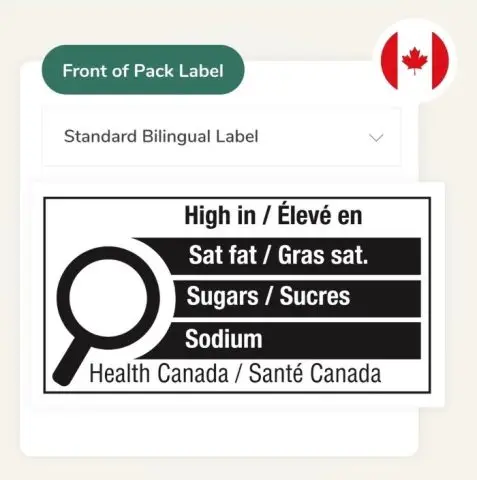
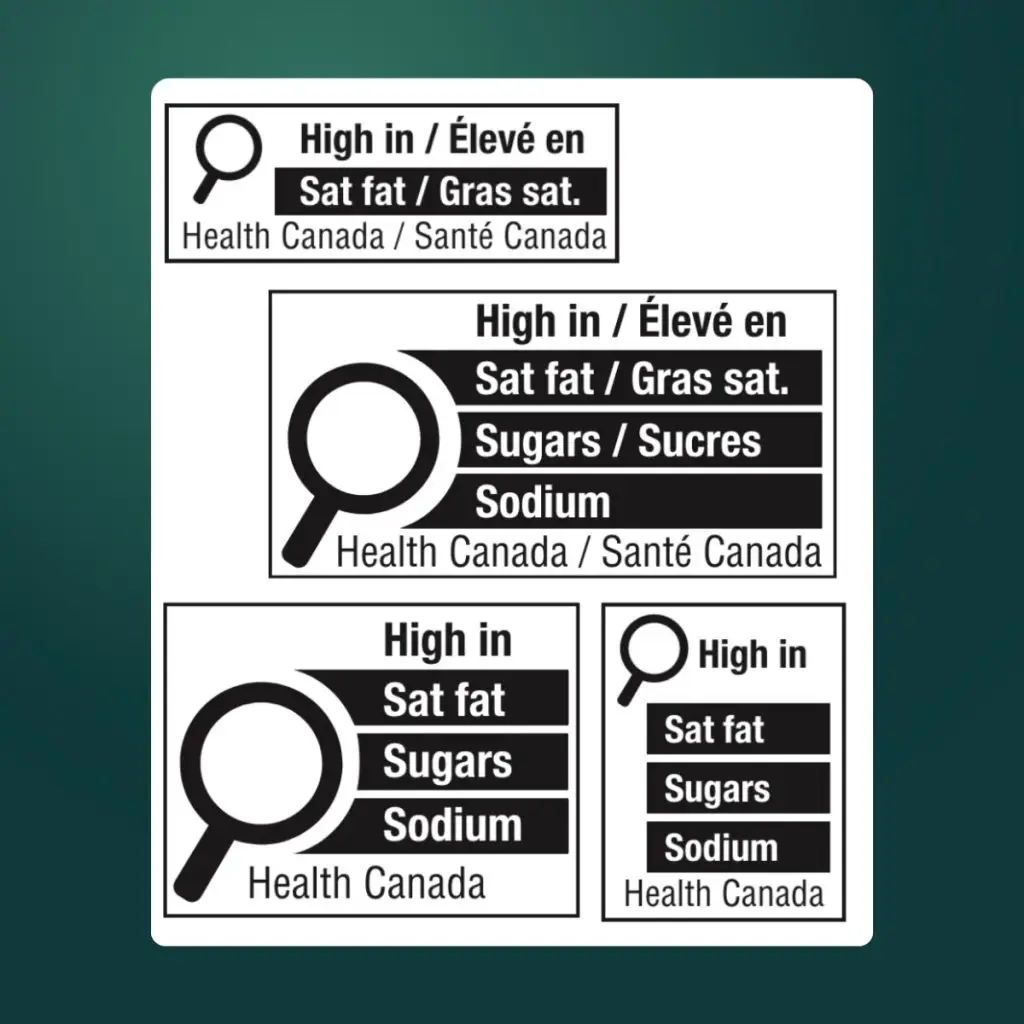
The FOP symbol design is supposed to be simple yet impactful. It features a large magnifying glass symbol to the left and lists the key nutrients of concern: saturated fats, sugars, and sodium to the right. This design is intended to be easily recognizable and understandable, even at a glance. The symbol’s black-and-white color scheme ensures high visibility on various packaging backgrounds, making it hard to miss on food labels. It must also have “Health Canada” written in bold letters at the bottom of the symbol in whatever format it is presented in to indicate that it has been attributed to the Health Canada institution.
This package FOP nutrition design relies on a high-contrast, black-and-white format so it stays legible across a wide range of packaging styles.
See How FoodLabelMaker Can Help You
See How FoodLabelMaker Can Help You
Canada FOP Symbol Requirements and Placement Rules
Ensuring that the Front-of-Package (FOP) symbol is correctly displayed on product packaging is crucial for compliance with Health Canada’s regulations. This involves adhering to specific guidelines regarding the size and placement of the symbol, as well as ensuring that the overall packaging design meets technical compliance standards.
FOP Symbol Size and Placement on the Principal Display Panel
The FOP symbol must be prominently displayed on the front of the packaging to ensure it is immediately visible to consumers. Key specifications include:
- Size: The symbol should be large enough to be easily readable, typically covering at least 5% of the front-facing display area of the package.
- Location: Ideally positioned in the top right-hand side of the principal display panel (PDP), close to the brand name or product title, to ensure high visibility. Health Canada requires the symbol to appear on the principal display panel, in the upper half when the panel is taller than it is wide, or the right half when it is wider than it is tall. To see how a fully compliant Canadian label is laid out, take a look at our CFIA nutrition label templates.
Packaging and Label Design Requirements for Compliance
Beyond the FOP symbol, the overall packaging and label design must meet certain technical standards to ensure clarity and consistency. This includes:
- Legibility: All text, including the FOP symbol, must be clear and easy to read against the package background.
- Contrast: High contrast between the symbol and the packaging ensures that the symbol stands out and is not obscured by design elements.
- Non-Interference: The symbol should not be overlapped by other graphics or text that could impede its visibility or readability.
Adhering to these technical requirements ensures that the FOP symbol serves its intended purpose effectively, guiding consumers toward healthier food choices.
Daily Value (DV) Thresholds That Trigger the FOP Symbol
Daily Value (DV) thresholds are critical benchmarks that tell us how much of certain things like saturated fat, sugars, and salt (sodium) are in our food compared to what is considered average or okay to have in a whole day. Think of it like a speed limit for nutrients. If a food has too many of these things – more than what’s set as the standard “speed limit” – it needs to have the FOP symbol on the package to indicate this. This symbol is a heads-up to let us know that eating too much of this food might not be the best for our health. These nutrient thresholds give shoppers a fast way to choose foods that fit their dietary needs without reading the full label.
For food packaging, these thresholds are shown as a percentage of the nutrient’s DV per serving size or reference amount so that you can determine whether a product must display the FOP symbol. “Reference amount” refers to the typical quantity of food consumed in a single eating occasion, whereas the “serving size” is the amount of food that the nutritional information on the package is based on, derived from the reference amount. It is a business’s responsibility to ensure their products stay within these limits or label them with the FOP symbol to inform consumers of potential high nutrient contents.
The reference amount follows Canada’s Reference Amount guidance, while the serving size shown on the label is derived from it. Keep in mind that these percentages are calculated after applying CFIA rounding rules, which can determine whether a product crosses a threshold.
Which Foods Require the Canada FOP Symbol?
The range of products that require the FOP symbol ranges from items as simple as pickles to frozen pizza or even some desserts. As stated, it is mainly required to be on packaged foods with a lot of sodium, saturated fat, and sugar. The FOP symbol is added based on how much of these nutrients are in the food, using the standard measure of the Daily Value (%DV). In practice, most prepackaged foods that pass the limits below will need the symbol, though the exact trigger depends on the product category.
To elaborate further, the following main categories of products typically require the FOP symbol:
- Standard prepackaged items that reach or go beyond 15% DV for saturated fat, sugars, or sodium.
- Prepackaged items that are consumed in smaller amounts (equal to or less than 30 g/mL) that reach or go beyond 10% DV for saturated fat, sugars, or sodium.
- Prepackaged main dishes (200 g or more for adults, or 170g for children from 1-4 years of age) that reach or go beyond 30% DV for saturated fat, sugars, or sodium.
Here are some real-life examples of food items that need to display the symbol:
- Processed Snacks: Chips, crackers, and other salty snacks often exceed the thresholds for sodium and saturated fats, necessitating the FOP symbol to alert consumers to their high content.
- Ready-to-Eat Meals: Frozen dinners, instant noodles, and other convenience foods frequently contain high levels of sodium and saturated fats, making them prime candidates for the FOP symbol.
- Sugary Beverages: Soft drinks, fruit-flavored drinks, and energy drinks high in added sugars require the FOP symbol to indicate their sugar content.
- Baked Goods: Cookies, cakes, and pastries that are high in sugars and saturated fats must display the FOP symbol to inform consumers of their nutrient levels.
- Dairy Products: Certain flavored yogurts and ice creams that exceed the thresholds for sugars and saturated fats need the FOP symbol.
- Breakfast Cereals: Cereals with high sugar content are required to have the FOP symbol to highlight their sugar levels.
These products are targeted because they contribute significantly to the intake of nutrients associated with health risks when consumed in excess.

Foods Exempt from the Canada FOP Symbol
Health Canada has also outlined specific exemptions and limitations for certain foods that will not be required to display the FOP nutrition symbol. They have been categorized into health-related, technical, and practical exemptions:
Health-Related Exemptions:
Health-related exemptions cover foods that benefit overall health or serve specific vulnerable groups. This includes fresh, frozen, canned, or dried fruits and vegetables, dairy products like 2% and whole milk, eggs, and foods rich in healthy fats such as vegetable oils, nuts, and fatty fish. These foods, including whole fruits and other single ingredient foods, are exempt unless saturated fat, sugars, or sodium have been added during processing.
Dairy products that contribute to calcium intake, like certain cheeses and yogurts, are also exempt because consumers don’t usually get enough calcium and these foods help prevent nutrient deficiencies, provided they meet the specific DV for calcium.
Additionally, foods designed for unique populations, like military rations, are exempt.
Technical Exemptions:
Technical exemptions apply to foods that generally don’t require a Nutrition Facts table, such as raw, unmanufactured, and single-ingredient meats, poultry, fish, and items sold at farmers’ markets. Single ingredient ground meats and poultry are also exempt, since they are treated as whole cuts for this purpose, though the exemption no longer applies once a claim is made or ingredients such as salt or spices are added.
Foods not sold directly to consumers and those in very small packaging, like single-serving coffee creamers and mini chocolate bars, are also exempt because they contribute little to daily calorie intake.
Practical Exemptions:
Foods where the FOP symbol would be redundant, such as packages of sugar, honey, maple syrup, salts, butter, and other fats and oils are exempt due to their built-in nutrient content.
For products that do carry added ingredients, separate requirements around ingredient lists, allergen labelling, and B2B sweetener declarations still apply alongside the FOP rules.
FOP Thresholds for Saturated Fat, Sugars, and Sodium
As stated, Daily Value (DV) thresholds are critical in determining whether a food product requires the FOP symbol. DVs are reference amounts set by health authorities, in general, to help consumers understand the nutrient content of foods in the context of a total daily diet.
For FOP labelling, the specific DV thresholds are:
- Saturated Fat: Products that contain 15% DV or more per reference amount or serving size (whichever is greater) require the FOP symbol.
- Sugars: Similar to saturated fat, products with 15% DV or more of sugars per reference amount or serving size need the FOP symbol.
- Sodium: Foods with a sodium content of 15% DV or more per reference amount or serving size are required to display the FOP symbol.
For example, if a single serving of a food product contains 15% or more of the DV for sodium (which is 2300 mg per day), it would need to carry the FOP symbol to indicate its high sodium content.
| Product category | Reference amount | %DV threshold (saturated fat, sugars, or sodium) |
| Standard prepackaged foods (not main dishes) | More than 30 g or 30 mL | 15% DV |
| Foods with a small reference amount | 30 g or 30 mL or less | 10% DV |
| Prepackaged main dishes | 200 g or more (170 g for children aged 1 to 4) | 30% DV |
How FOP labelling Affects Product Formulation and Reformulation
The introduction of FOP labelling has significant implications for product formulation and labelling practices within the Canadian food industry. Manufacturers may need to reformulate products to reduce levels of saturated fat, sugars, and sodium to meet %DV thresholds and avoid the FOP symbol. This might also involve substituting ingredients, reducing portion sizes, or altering recipes to improve the nutritional profile. Such changes not only affect the health level of the product but also its taste, and shelf life, and could influence consumer purchasing decisions. Reducing these nutrients also addresses a long-standing public health concern and supports the government’s broader nutrition goals.
labelling strategies will also need to adapt, incorporating the FOP symbol on products that exceed the DV thresholds. Businesses must carefully balance nutritional improvements with consumer expectations and product identity, ensuring that any changes they make still align with brand values and market demands. This regulatory change ultimately aims to improve Canada’s food environment and educate customers on the nutrients they choose to consume every day.
Nutrient Content Claims and FOP labelling Prohibitions
With the introduction of the FOP labelling regulations, there are also new rules regarding nutrient content claims and marketing practices. These are intended to prevent misleading claims and ensure that consumers receive accurate and helpful nutritional information. Health Canada has also set forth limitations on the types of nutrient content claims that can be made for products requiring the FOP symbol.
Specifically:
- Restrictions on Highlighting Nutrients: Products that display the FOP symbol due to high levels of saturated fat, sugars, or sodium cannot make claims that imply health benefits related to these nutrients.
- Accuracy of Claims: Any nutrient content claim must be verifiable and based on the product’s actual nutritional profile, ensuring that it does not contradict the information conveyed by the FOP symbol.
These are designed to ensure that product claims do not mislead consumers about the healthfulness of foods high in nutrients of concern. Any nutrient content or health claims must still meet Health Canada’s separate requirements, and they cannot contradict the warning that the symbol provides.
Marketing and Advertising Restrictions for FOP Foods
In addition to limitations on nutrient content claims, there are also specific rules for marketing and advertising products that have the FOP symbol, including:
- Targeted Marketing: Advertisements for these products can’t specifically be targeted at groups like kids who might be more at risk.
- Promotional Claims: Advertisements can’t focus on the satisfying taste or easy use of these products if they go against the health warning the FOP symbol gives.
These restrictions assist in promoting a healthier society by ensuring that advertisements don’t advocate for consuming foods that might not be good for us, in line with Health Canada’s goal for everyone to eat a more sustainable and nourishing diet.
Final Thoughts on Canada Front of Pack labelling
Canada’s front-of-package rules represent one of the most significant updates to food labelling in years, and most prepackaged foods sold across the country now fall within their scope. Getting compliance right protects your business from regulatory risk and signals to shoppers that you take their health seriously, which supports stronger health outcomes over time.
If you sell in Canada, the practical first step is to check each product against the nutrient thresholds and confirm which related requirements apply to your packaging. Our guides on CFIA nutrition labels in Canada, allergen labelling, and the new supplemented foods regulations walk through what else affects your labels. If your products sit in a specialized category, our Canada cannabis packaging and labelling guide covers those rules too.
Food Label Maker generates CFIA-compliant nutrition labels, including the front-of-package symbol, in minutes. See how our labels meet Canada’s regulations and create a compliant label for your products today.
Frequently Asked Questions About Front of Pack labelling in Canada
1. Do Canada’s front-of-package labelling rules apply to all prepackaged foods?
No. The rules apply to most prepackaged foods, but a product only needs the symbol if it meets or exceeds the Daily Value thresholds for saturated fat, sugars, or sodium. Several categories are also exempt, including whole fruits and vegetables, single ingredient foods, and items that don’t require a Nutrition Facts table. You can see how this fits into the wider rulebook in our CFIA regulatory hub and our guide to nutrition labels in Canada.
2. How do Canada’s FOP nutrient thresholds relate to the Nutrition Facts table?
The thresholds use the same Daily Values that appear in the Nutrition Facts table, measured as a percentage per reference amount or serving size. A product crosses the threshold when saturated fat, sugars, or sodium reaches the set %DV for its category. Because the figures depend on serving size and rounding, it helps to review our CFIA nutrition label templates,serving size rules, and CFIA rounding rules when checking your products.
3. Can a product make health or nutrient claims if it needs a front-of-package symbol?
It can still make claims, but with limits. A product cannot make a claim that highlights a nutrient the symbol is warning about, and any claim must be accurate and consistent with the product’s nutrition profile. Our guides on health claims and nutrient density claims explain what is and isn’t allowed.
4. Do Canadian FOP rules affect ingredient lists, allergens, or sweetener declarations?
The front-of-package rules are a separate requirement, so they don’t replace your other labelling obligations. You still need a compliant ingredient list, correct allergen labelling, and accurate B2B sweetener declarations alongside the FOP symbol.
5. Does Food Label Maker support CFIA-compliant labels for Canadian products?
Yes. Food Label Maker generates CFIA-compliant nutrition labels, including the front-of-package symbol, for products sold in Canada. You can read more about how our labels meet Canada’s regulations and explore our CFIA-compliant nutrition facts software.
6. How are Canada’s front-of-package labelling rules different from FDA front-of-package
labelling?
Canada requires a mandatory “high in” symbol on qualifying prepackaged foods that exceed the thresholds for saturated fat, sugars, or sodium. The FDA operates a separate framework for the US market, so a product sold in both countries has to meet each set of rules independently. Our guide to FDA front-of-pack labelling covers the US side in detail.
7. How does Canada’s FOP symbol compare with UK front-of-pack nutrition labelling?
Canada uses a mandatory warning-symbol approach that flags specific nutrients of concern. The UK commonly uses a front-of-pack nutrition panel with a traffic-light style colour system that is largely voluntary. You can read more in our overview of UK front-of-pack labels.

Related Posts