Fat loss yield adjustment is the calculation that accounts for fat rendered out and discarded during cooking, and it’s needed to keep a nutrition label’s fat and calorie values accurate instead of overstated.
When fat renders out during cooking, whether it’s the grease that drains off browned ground beef or the fat that pools out of bacon in a pan, it changes what’s actually left in the finished product. Skip the fat loss yield adjustment and your nutrition label will overstate the fat and calories a consumer is actually getting.
This is closely related to moisture loss, covered in guide: Moisture Loss in Food Labeling: Formula, Chart & How to Calculate Yield for Accurate Nutrition Labels but the direction of the error is reversed. Moisture loss concentrates nutrients, understating them if left unadjusted. An unaccounted fat loss yield gap does the opposite: it overstates what’s on the label. This article covers how to account for fat loss in nutrition labeling, the formula for calculating it, and a data-backed chart of typical percentages for the products where it matters most.
What’s the Difference between Fat Loss and Fat Trimming in Food Processing?
In food processing, fat loss means the fat that renders out and physically leaves a product during cooking, which is different from fat trimming.
Fat trimming happens before cooking. It’s the physical removal of visible fat from a cut of meat, done by hand or equipment as part of prepping the raw product. Fat loss happens during cooking, when fat that’s still part of the raw formulation melts, separates from the muscle and connective tissue, and leaves the product rather than being reabsorbed.
The distinction matters because each one gets accounted for at a different point in a recipe. Trimming changes the raw formulation itself, so it’s already baked into the ingredient weights before any cooking calculation begins. Fat loss only shows up once a product hits the pan, oven, or grill, which is why it needs its own yield adjustment rather than being folded into how the raw recipe is built. This shows up most in products like sausage, brisket, chuck roast, and well-marbled steaks, since they carry more fat that can render out during cooking.
Fat Loss vs Moisture Loss in Food Labeling
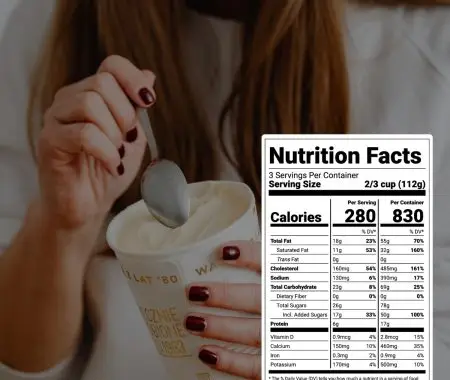
Moisture loss removes water and concentrates the nutrients that remain, a case of fat concentration rather than fat loss. Fat loss instead removes actual fat and calories from the product, changing its caloric density during cooking. Both affect a nutrition label, but in opposite directions.
Cooking a product like ground beef triggers both moisture loss and fat loss at the same time, but treating them as a single “cooking loss” adjustment produces the wrong numbers.
Worked Example: Fat Loss vs. Moisture Loss in Ground Beef
A raw 100g ground beef patty breaks down roughly into:
- 65g water
- 20g fat
- 15g protein and other solids
After cooking, it weighs 65g, a 35g loss.
That loss splits into:
- 10g of water that evaporated
- 25g of rendered fat and water that drained away together
How that 35g gets classified changes the label:
- Treat it as pure moisture loss: the software assumes no fat left the product, so the label overstates fat and calories per serving.
- Treat it as pure fat loss: the software assumes almost no water left, so protein and mineral values per gram get inflated instead.
The only way to get an accurate label is to measure the two separately, either through lab analysis of the finished product’s fat and moisture content, or a controlled before-and-after test that isolates how much of the weight change came from each source. That separation is only possible with software that accepts moisture loss and fat loss as two distinct inputs rather than one blended yield adjustment.
See How FoodLabelMaker Can Help You
The Fat Loss Formula for Nutrition Labeling: How to Calculate It
Calculating a fat loss yield adjustment requires the fat content of a product before and after cooking, either from lab analysis or a controlled before-and-after weighing.
Fat Loss Formula:
Fat loss % = ((Fat weight before cooking − Fat weight after cooking) ÷ Fat weight before cooking) × 100
This differs from a moisture loss calculation, which typically works off total product weight since the assumption is that the difference is water. Fat loss requires isolating the fat weight specifically, since fat and water are usually leaving the product together.
For example, if a batch of bacon starts with 300g of fat and renders down to 200g after cooking, the fat loss is (100 ÷ 300) × 100, or about 33%, which lines up with USDA data showing bacon losing roughly a third of its fat regardless of cooking method.
Fat loss and fat retention factor describe the same change from two different angles. A 33% fat loss corresponds to a fat retention factor of 0.67, and manufacturers who prefer working from USDA fat retention factors rather than raw loss percentages can convert between the two directly.
Fat Loss Chart: USDA Data for Ground Beef, Beef Cuts, Bacon, and Sausage
The table below breaks down the cooking loss percentage for fat content by product. USDA’s own data labels this figure Fat Gain/Loss %, based on cooking yield data, so you can see where fat loss is significant enough to require a real adjustment and where it barely registers.
Ground Beef Fat Loss Percentage by Fat Content
| Fat Content | Cooking Method | Cooking Yield % | Fat Loss % |
| Low fat (under 12%) | Broiled or grilled | 73% | -1.6% |
| Low fat (under 12%) | Pan-broiled | 77% | -1.4% |
| Medium fat (12-22%) | Broiled or grilled | 69% | -5.2% |
| Medium fat (12-22%) | Pan-broiled | 73% | -6.2% |
| High fat (over 22%) | Broiled or grilled | 63% | -12.0% |
| High fat (over 22%) | Pan-broiled | 69% | -12.4% |
USDA Table of Cooking Yields for Meat and Poultry
Beef Cuts Fat Loss Percentage: Steaks, Roasts, and Brisket
| Cut | Cooking Method | Cooking Yield % | Fat Loss % |
| Tenderloin steak, lean and fat | Broiled or grilled | 80% | -5.9% |
| Top sirloin steak, lean and fat | Broiled or grilled | 80% | -2.7% |
| Top loin (short loin) steak, lean and fat | Broiled or grilled | 82% | -4.0% |
| Rib eye steak, bone-in, lean and fat | Grilled | 86% | -0.3% |
| Rib eye roast, bone-in, lean and fat | Roasted | 77% | -1.7% |
| Round, eye of round roast, lean and fat | Baked or roasted | 81% | -1.2% |
| Round, top round steak, lean and fat | Broiled or grilled | 72% | -1.8% |
| Round, bottom round roast, lean and fat | Baked or roasted | 84% | -2.8% |
| Chuck, arm pot roast, lean and fat | Braised | 71% | -8.3% |
| Chuck eye roast, boneless, lean and fat | Roasted | 80% | -0.4% |
| Brisket, flat half, lean and fat | Braised | 69% | -10.2% |
| Flank steak, lean and fat | Broiled or grilled | 81% | -1.0% |
| Rib, back ribs, bone-in, lean and fat | Braised | 75% | -7.1% |
USDA Table of Cooking Yields for Meat and Poultry
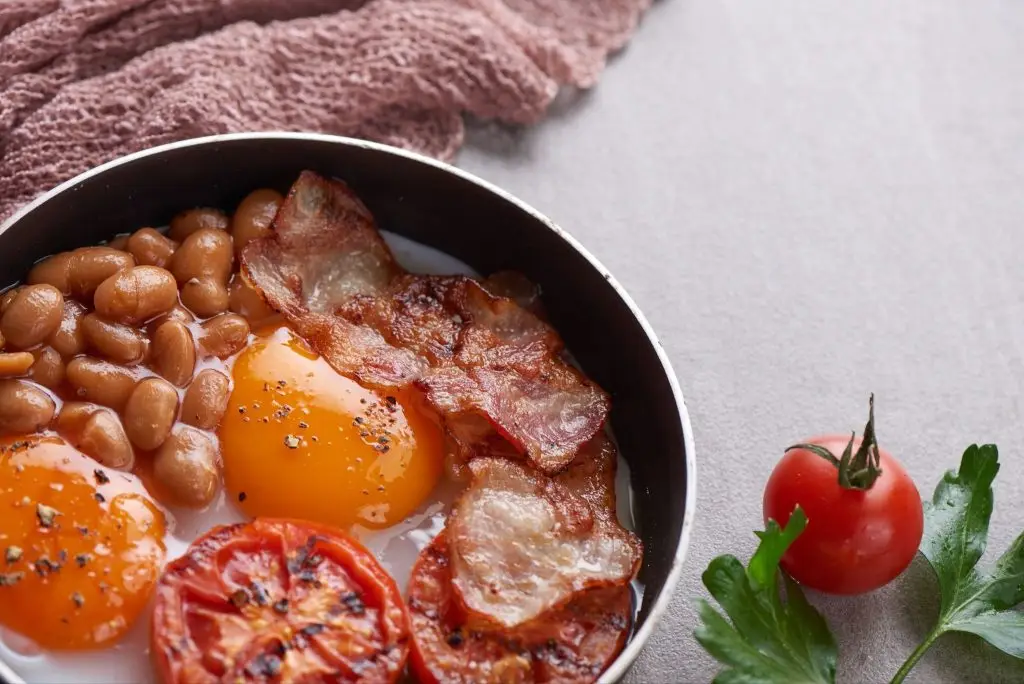
Bacon Fat Loss Percentage by Cooking Method
| Cooking Method | Cooking Yield % | Fat Loss % |
| Baked or roasted | 32% | -32.4% |
| Fried in pan | 31% | -33.8% |
| Microwaved | 29% | -35.5% |
USDA Table of Cooking Yields for Meat and Poultry
Pork Sausage Fat Loss Percentage
| Cooking Method | Cooking Yield % | Fat Loss % |
| Fresh pork sausage, fried in pan | 80% | -3.9% |
USDA Table of Cooking Yields for Meat and Poultry
Fat loss scales with a cut’s starting fat content and cooking time, brisket and chuck roast lose far more than a quick-cooked rib eye, while bacon loses roughly a third of its fat regardless of method.
USDA doesn’t publish fat loss figures for chicken, turkey, or lamb with the same detail. For poultry where fat rendering matters, manufacturers should run their own before-and-after testing instead.
How Food Label Maker Handles Fat Loss in Recipe Formulation
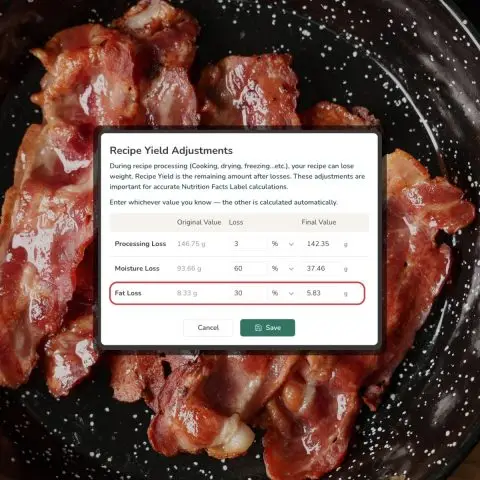
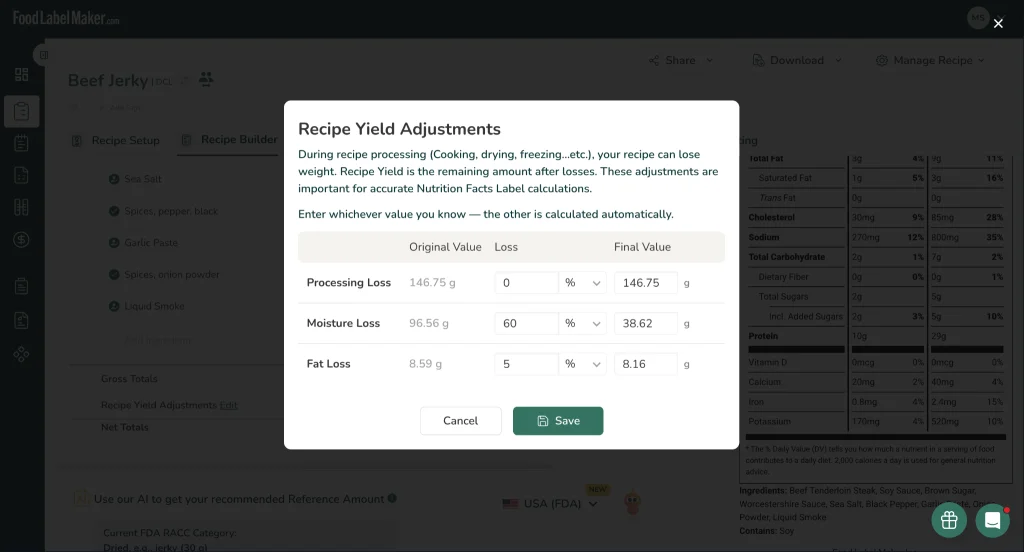
Food Label Maker’s Recipe Yield Adjustments panel functions as a built-in fat loss calculator, alongside separate fields for processing loss and moisture loss, rather than one blended yield adjustment for the nutrition label. For each one, you can enter whichever value you know, the original amount or the percentage lost, and the platform calculates the other automatically.
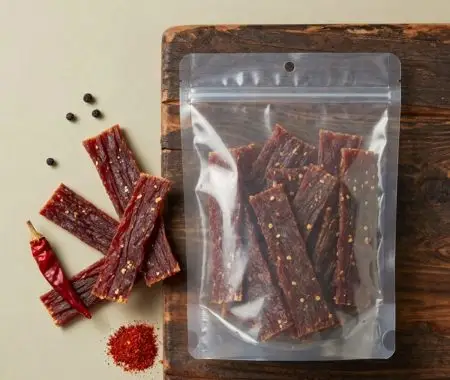
For a dehydrated product like beef jerky, that separation matters. Moisture loss is the dominant factor, often 60% or more, since drying is what makes jerky shelf-stable in the first place. Fat loss stays comparatively small, since dehydration doesn’t render fat out the way frying or grilling does. Entering each value into its own field means the finished product’s nutrition facts reflect both changes accurately, rather than approximating them with a single combined yield adjustment.
This keeps the nutrition facts reflecting the product as sold rather than its raw weight, whether the fat left through drainage, rendering, or evaporation.
Frequently Asked Questions About Fat Loss Yield Adjustment in Nutrition Labels
1. What’s the difference between fat loss and fat trimming?
Fat trimming happens before cooking, it’s the physical removal of visible fat from a cut of meat during prep. Fat loss happens during cooking, when fat still in the raw formulation melts and separates from the product rather than being reabsorbed. Trimming is baked into the raw ingredient weights, while fat loss needs its own yield adjustment applied after cooking.
2. What’s the difference between fat loss and moisture loss on a nutrition label?
Moisture loss concentrates the nutrients that remain in a product, so an unadjusted label tends to understate fat and calories. Fat loss removes actual caloric mass from the product, so an unadjusted label tends to overstate them instead. The two often happen at the same time but need to be calculated separately to get an accurate result.
Read more about moisture loss through our guide: Moisture Loss in Food Labeling: Formula, Chart & How to Calculate Yield for Accurate Nutrition Labels
3. How do you calculate a fat loss yield adjustment?
Fat loss percentage is calculated as ((fat weight before cooking − fat weight after cooking) ÷ fat weight before cooking) × 100, using fat content measured from lab analysis or a controlled before-and-after weighing. For example, if 300g of fat in a batch of bacon renders down to 200g after cooking, that’s a 33% fat loss.
4. Which foods have the highest fat loss during cooking?
Bacon has the most dramatic fat loss of any commonly labeled food, losing roughly a third of its fat regardless of cooking method. Fatty, slow-cooked beef cuts like brisket and chuck roast also lose significant fat, while lean cuts like rib eye steak lose very little. In general, fat loss scales with a product’s starting fat content and cook time.
5. How does Food Label Maker handle fat loss?
Food Label Maker’s Recipe Yield Adjustments panel includes fat loss as its own input, separate from moisture loss and processing loss. Enter either the original fat amount or the percentage lost, and the platform calculates the finished product’s nutrition facts automatically. Get started here or view our pricing plans.
6. Does the cooking equipment used affect fat loss enough to require separate testing?
Yes. A commercial fryer, a convection oven, and a flat-top grill all transfer heat differently, which changes how much fat renders out and how quickly. Two identical ground beef formulations can show meaningfully different fat loss percentages depending on whether they’re pan-fried or oven-roasted, so fat loss data from one piece of equipment shouldn’t be assumed to carry over to another without verification.
7. Can a recipe be reformulated to reduce fat loss and improve yield?
Sometimes. Binders, fillers, and certain protein blends can help retain fat during cooking, which is part of why formulation changes are common in processed meat products where yield and cost matter as much as nutrition accuracy. Any reformulation that changes fat retention will also change the finished product’s nutrition profile, so it needs to be re-tested rather than assumed to match the original recipe’s fat loss data.
8. How often should fat loss be retested when scaling a recipe from small batch to full production?
Fat loss measured in a small test batch doesn’t always hold at commercial scale, since larger batches, different equipment, and longer cook times can all shift the percentage. It’s worth retesting fat loss whenever a recipe moves to a new production line, a different piece of equipment, or a significantly larger batch size, rather than relying on the original small-batch figure indefinitely.