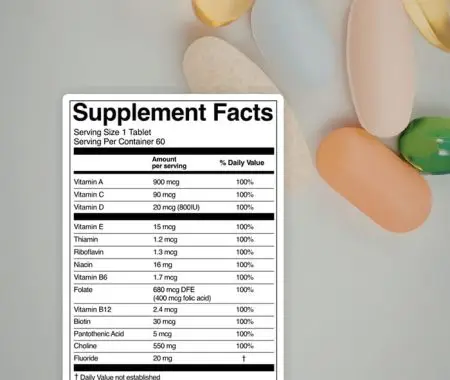
Supplement co-packers are becoming increasingly popular, mainly for their ability to provide specialized, scalable, and compliant production capabilities, allowing brands to reduce capital expenditure, accelerate speed-to-market, and focus on growth.
Higher utilization brings higher responsibility, with supplement brands increasingly asking for documented proof of labeling compliance including evidence of how supplement labels are built, allergens are detected and regulatory changes are handled.
This article is a useful guide for supplement co-packers covering the 5 compliance standards, in the form of questions, that supplement brands most commonly evaluate when selecting a supplement co-packer. This downloadable checklist at the end of the guide works two ways — as a self-audit tool for co-packers and as a document they can share with supplement brands to demonstrate their compliance process.
Build an FDA-compliant supplement facts label on Food Label Maker – book a demo today.
Do You Have a Centralized System for Supplement Formulas?
Supplement brands working with co-packers need to know that every formula is stored in a centralized system and not scattered across spreadsheets, local files, or email threads.
When a formula exists in multiple versions across multiple locations, there’s no reliable way to confirm which version produced a specific label. A centralized system should flow spec changes through to every affected product automatically so the co-packer isn’t relying on manual tracking to keep supplement labels accurate. Outdated ingredient data is one of the most common root causes of supplement label inaccuracies. Clients evaluating a supplement co-packer will ask when the ingredient library was last updated
Food Label Maker’s supplements module stores every formula in one, centralized system for all the components, ingredients and proprietary blends created.
How Are The Supplement Facts Labels Generated?
There’s a significant difference between a Supplement Facts label that’s generated directly from formula data and one that’s manually typed into a design tool. When a label is built manually, whether in Illustrator, Canva, or a Word template, there’s no link between the ingredient database, the formula calculations, and the final supplement label.
A supplement co-packer’s labeling process should generate Supplement Facts panels directly from the formula data, with %DV calculations, FDA rounding rules, and panel formatting applied automatically. This removes the manual steps where errors occur like applying the wrong rounding tier or forgetting to update a %DV after a formula revision.
A client brand evaluating a supplement co-packer will ask how labels are produced and the ideal answer is that the supplement facts panel is generated from formula data within a comprehensive system.
Food Label Maker generates FDA-compliant Supplement Facts panels directly from formula data. Proprietary blends, %DV calculations, rounding rules, and formatting are handled automatically by the platform.
See How FoodLabelMaker Can Help You
How Do You Track and Disclose Allergens Across Supplement Formulas?
An undeclared allergen can immensely damage a supplement co-packer’s reputation making it an important factor for supplement clients when choosing their co-packer.
The baseline expectation is that every formula is scanned for allergens that require disclosure under FALCPA — milk, eggs, fish, shellfish, tree nuts, peanuts, wheat, soybeans, and sesame. But the more common failure point is when an ingredient changes and the allergen statement is not automatically updated. If a supplement facts label is built manually, meaning without using a centralized system, there are alarming consequences if the changes don’t trickle down to every ingredient or component.
This becomes especially critical for supplement co-packers managing formulas across multiple brand clients. Allergen tracking must cover every active formula across all accounts and not just the most recent or highest-volume SKUs. Supplement brands will ask co-packers how allergens are tracked and what happens when an ingredient changes. The answer they’re looking for is a system that catches it automatically rather than a manual process.
Food Label Maker flags required allergen disclosures during formula creation and updates them automatically when ingredient data changes. Allergen tracking applies across all formulas and all client accounts within the platform, so a spec change on a shared ingredient surfaces the disclosure requirement everywhere it’s used.
What Happens When FDA Requirements Change?
FDA regulations for supplement labeling including elements like Daily Values, formatting rules, and other requirements are constantly changing. When a regulatory shift happens, a supplement co-packer must be diligent with the changes required, which needs a systematic, and automatic, process.
To avoid a chaotic situation, it needs to be clear what products are impacted, if changes can be done in bulk and if supplement brands are notified about the changes. If any of these steps depend on someone manually tracking regulatory news and cross-referencing it against every active formula, the process has a single point of failure.
Supplement brands expect their co-packer to catch regulatory changes proactively to avoid missing a regulatory update which could result in costly recalls if the product already made it to the shelf.
Food Label Maker applies regulatory updates directly to the platform as they take effect. When FDA requirements change the platform automatically updates existing formulas to align with the latest regulations. Beyond the platform itself, Food Label Maker’s regulatory team publishes updates across its blog and regulatory hub, keeping supplement manufacturers and co-packers informed on what changed, what it means, and how it affects their supplement labels.
Is The Supplement Labeling Platform SOC 2 Type 2 Compliant?
Co-packers handle some of the most sensitive data in the supplement industry. The platform where that data lives needs to meet the highest standards for safekeeping proprietary formulas, ingredient sourcing details, pricing structures, and unreleased product information.
SOC 2 Type 2 compliance is the industry benchmark for proving that a platform’s security controls, data handling processes, and system availability have been independently audited over a sustained period. It’s becoming increasingly common for supplement brands to take extra steps to ensure their proprietary data is protected, when in the hands of a co-packer.
Food Label Maker is SOC 2 Type 2 compliant. The platform’s security controls, data handling, and system availability have been independently audited. Combined with multi-client workspaces and role-based access controls, co-packers can demonstrate to their supplement brand clients that proprietary formula and labeling data is stored, managed, and protected to an independently verified standard.
Final Thoughts on Compliance for Supplement Co-Packers
The five standards covered in this guide — centralized formula management, automated label generation, allergen tracking, regulatory update processes, and platform security — are what supplement brands are actively evaluating when selecting and retaining a co-packer.
Use the checklist below to identify where your current process has gaps, then share it with your supplement brand clients to demonstrate the compliance infrastructure behind every label you produce.
Download the complete Supplement Co-Packer Self-Audit & Evaluation Guide including the maturity framework, platform evaluation questions, and scored self-audit.
Need compliant panels for your clients’ SKUs? Our supplement labeling consultants handle bulk orders.
Download the complete Supplement Co-Packer Self-Audit & Evaluation Guide

Ready to close the gaps? Book a Demo to see how Food Label Maker powers each of these standards in one platform.
Frequently Asked Questions About Supplement Co-Packer Compliance
1. What is a supplement co-packer?
A supplement co-packer (contract manufacturer) is a third-party manufacturer that produces, packages, and labels dietary supplements on behalf of a brand, allowing brands to scale without owning production facilities.
2. Why does automated dietary supplement label generation matter for supplement co-packers?
Manually built Supplement Facts panels have no link to the underlying formula data. This creates risk around incorrect %DV calculations, missed rounding rules, and supplement facts labels that don’t reflect the latest formula revision.
3. How often do FDA supplement labeling requirements change?
FDA regulations evolve regularly. Daily Values, formatting rules, and disclosure requirements can all shift. Supplement co-packers need a systematic process to catch these changes and apply them across their entire product portfolio rather than auditing supplement labels one by one.