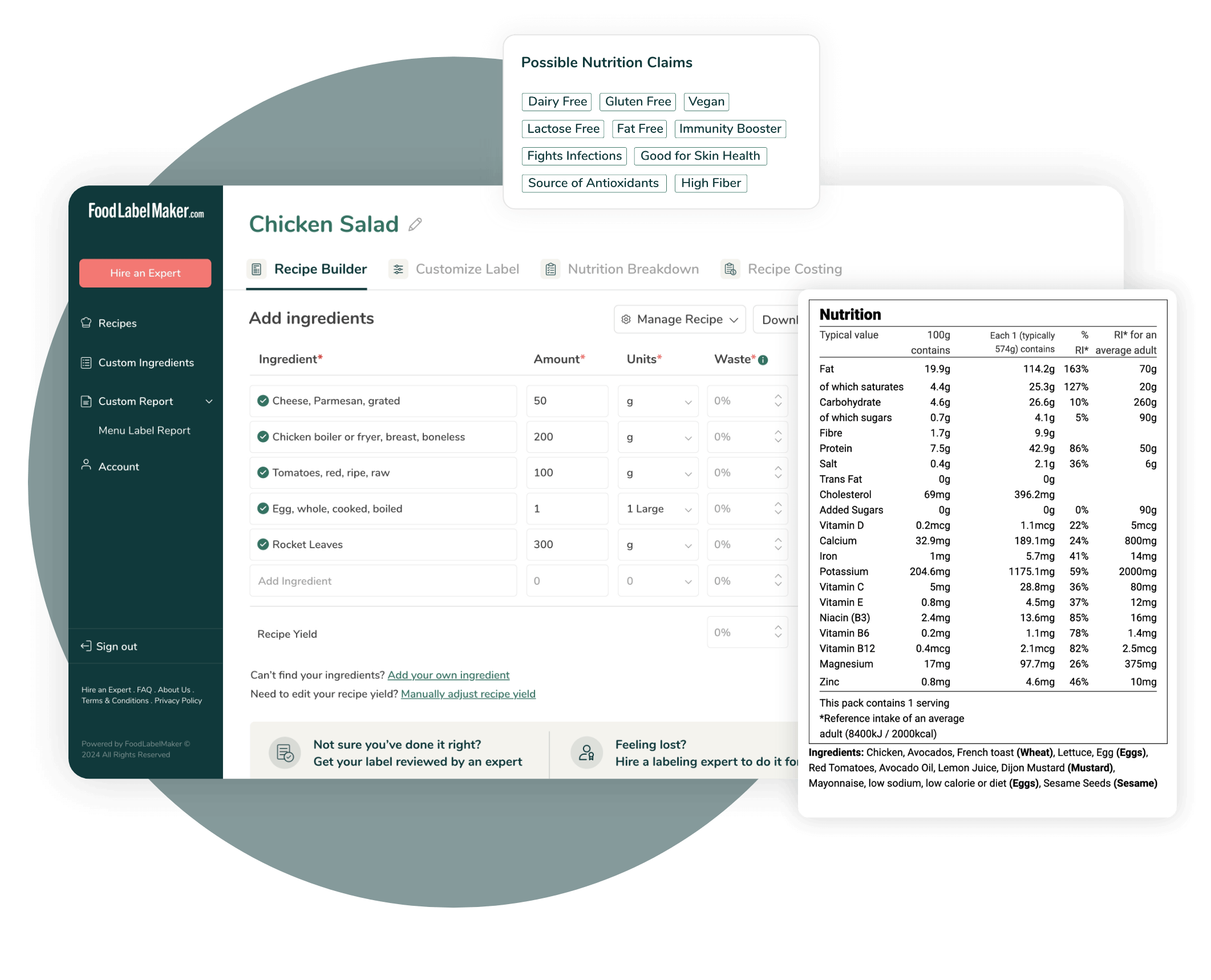
Easy and Compliant Nutrition Label Software
Developed by certified nutritionists, Food Label Maker provides user-friendly software that generates 100% regulatory-compliant nutrition facts labels.
We offer:
- Accurate nutrition analysis
- Customizable label formats and features
- Comprehensive menu and recipe management
- World-class customer support
Our Features
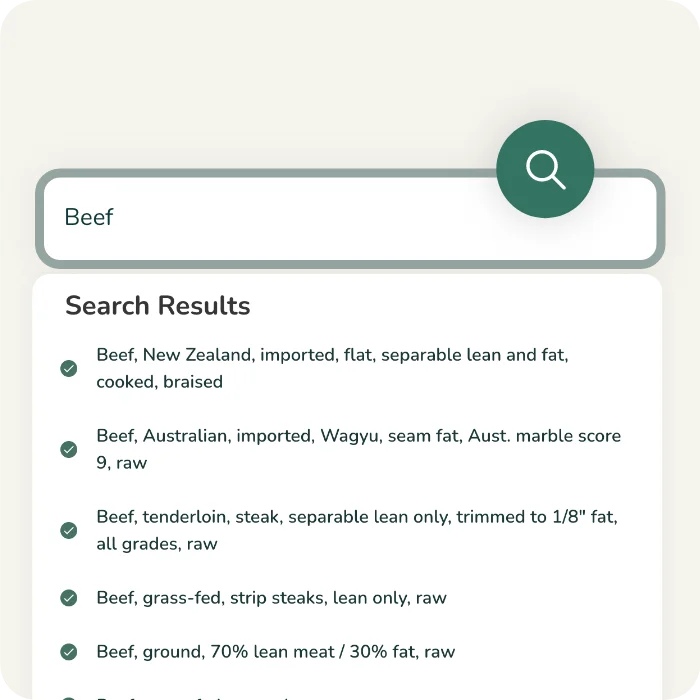
Verified Ingredient Database
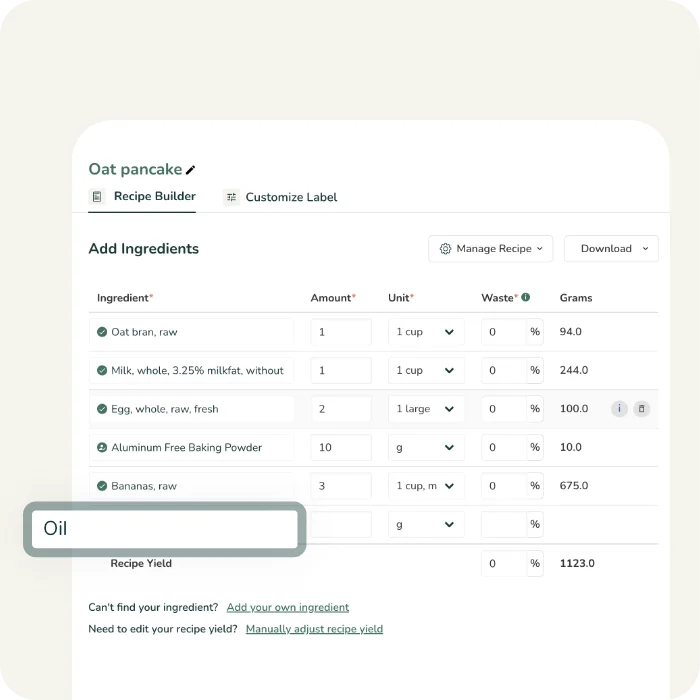
Simple Recipe Builder
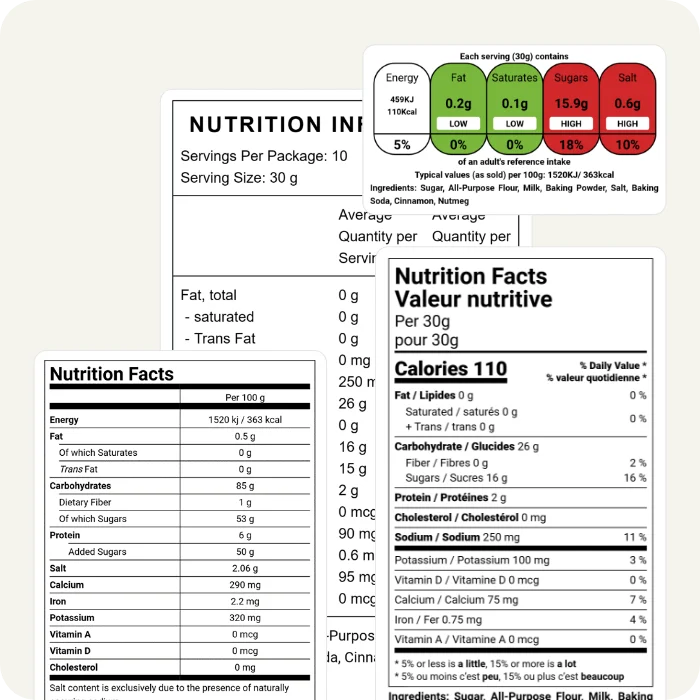
Market-Compliant Labels
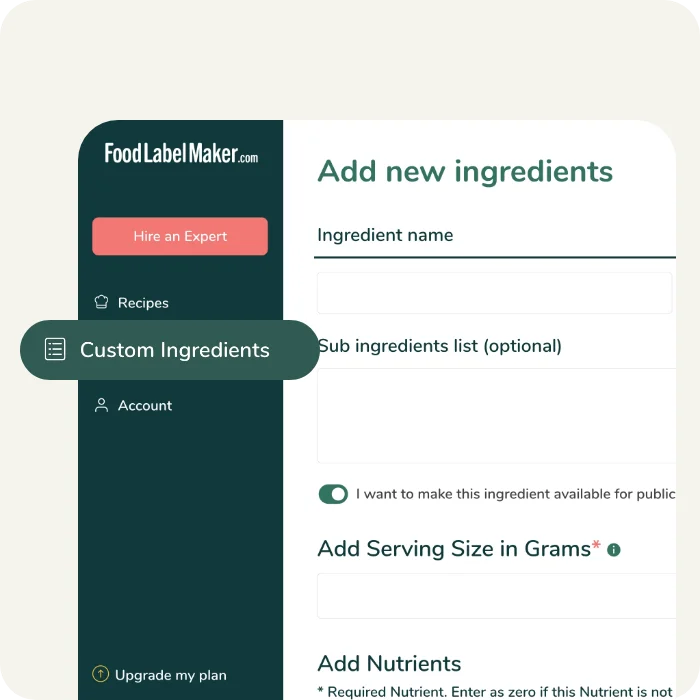
Add Custom Ingredients
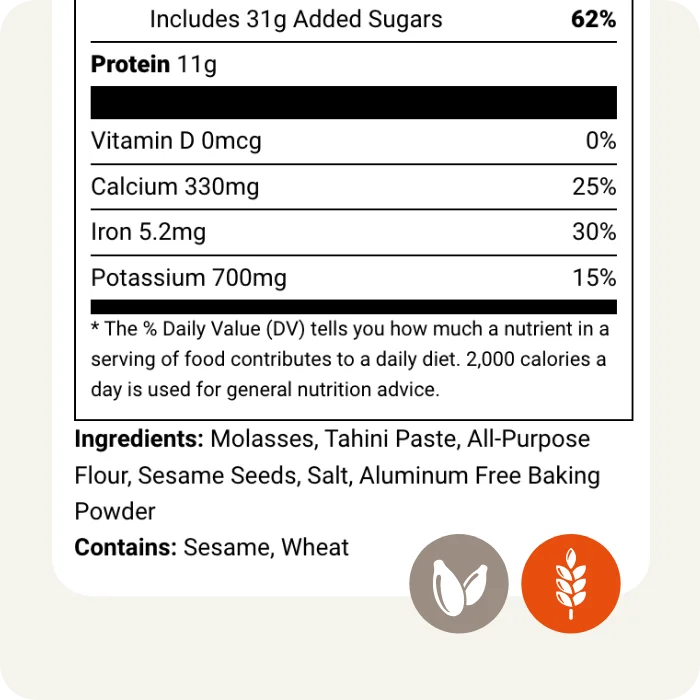
Automated Allergen Detection
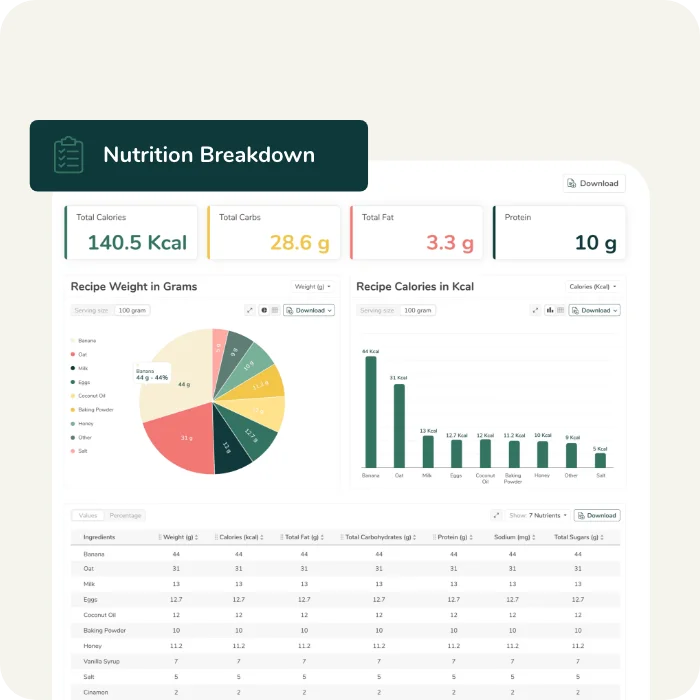
Detailed Nutrition Breakdown
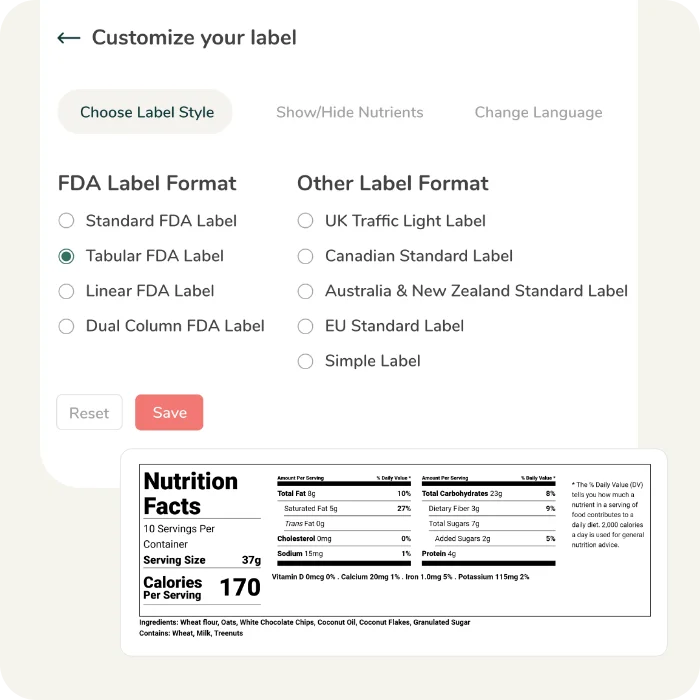
Multiple Label Styles & Formats
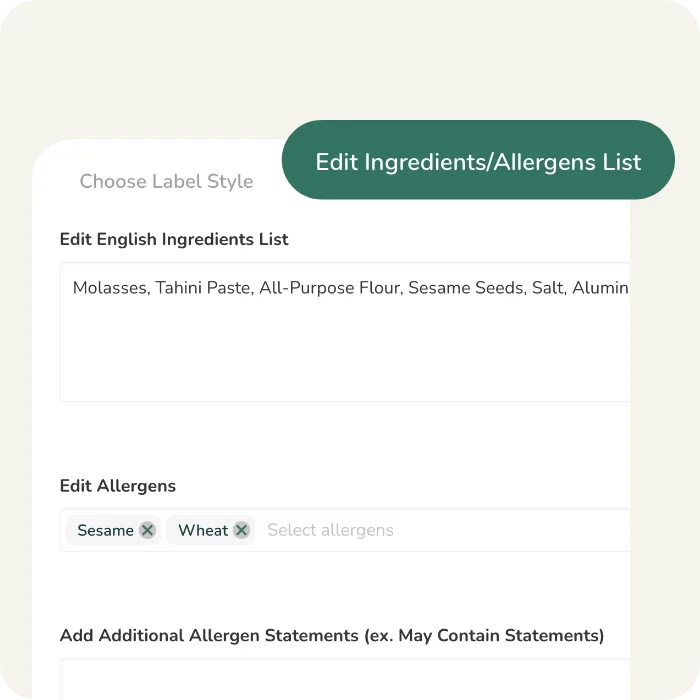
Editable Ingredient statement
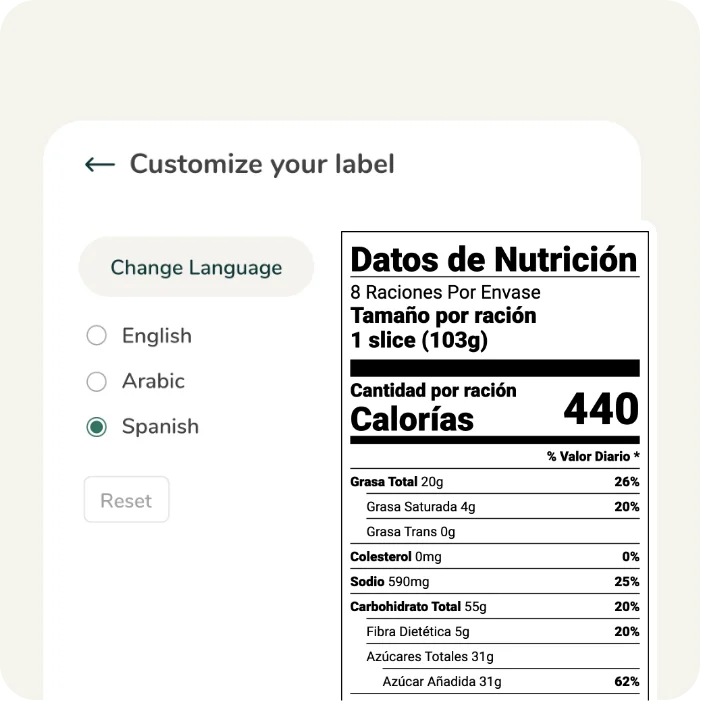
Built-In Language Translation
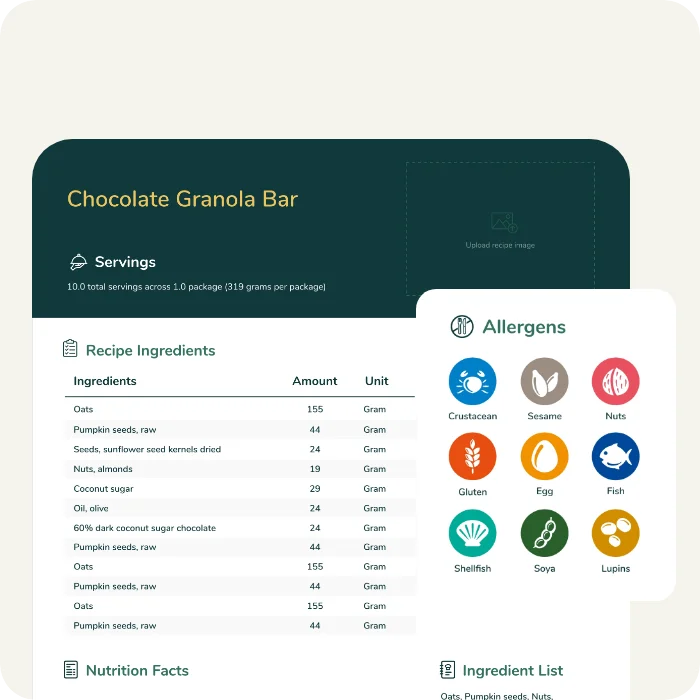
Comprehensive Recipe Cards
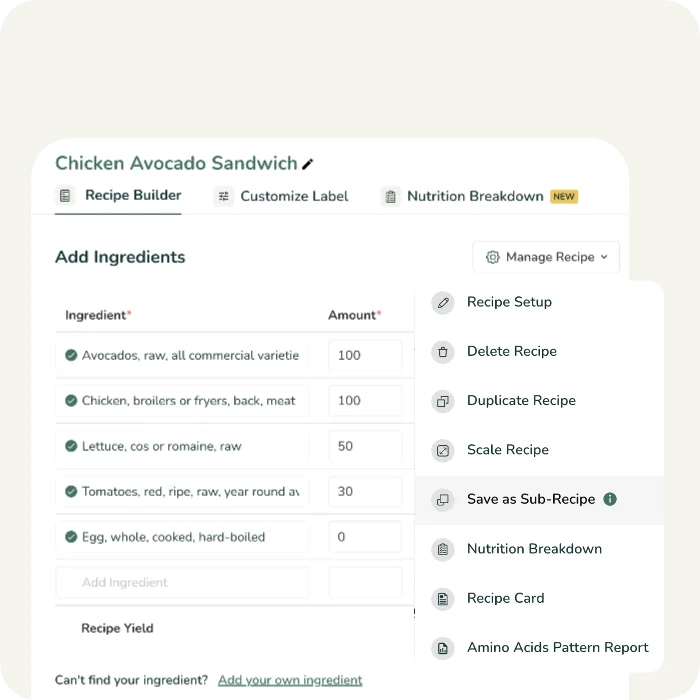
Sub-Recipe Builder
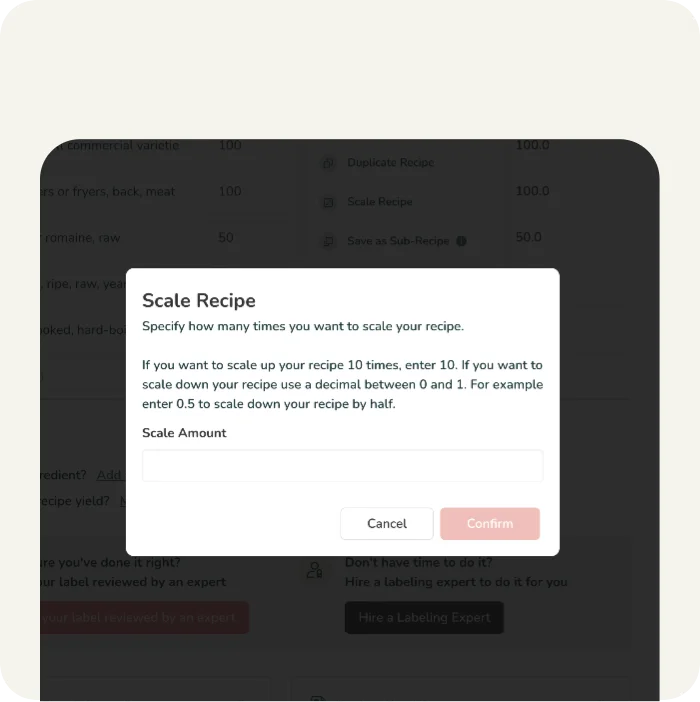
Recipe Scaling
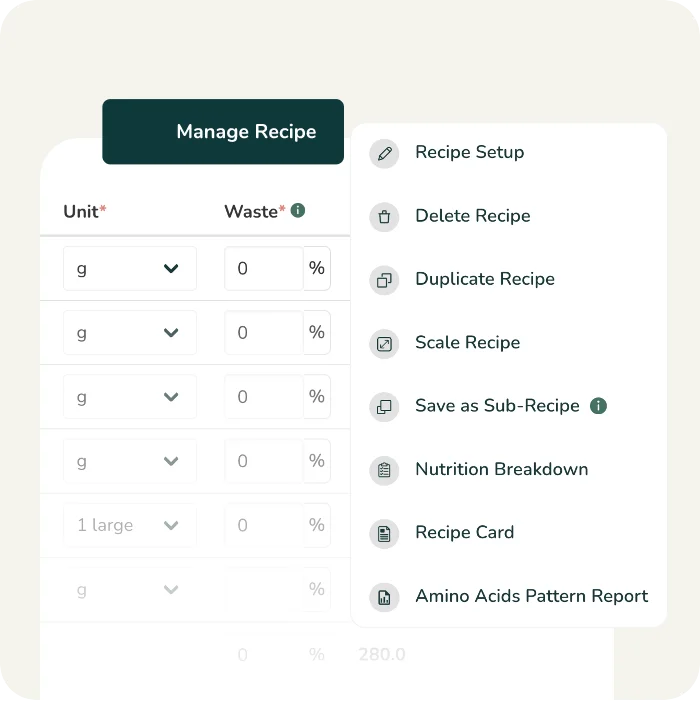
Recipe Management
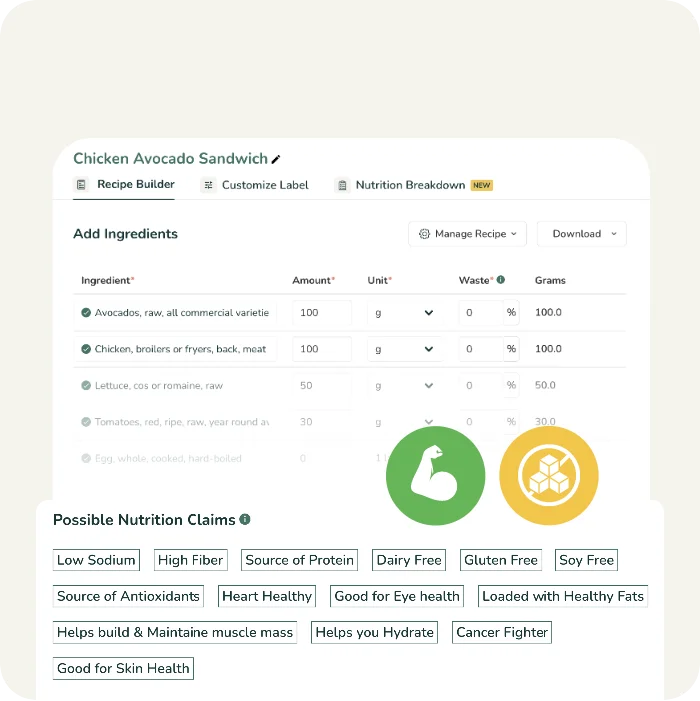
Suggested Nutrition & Marketing Claims
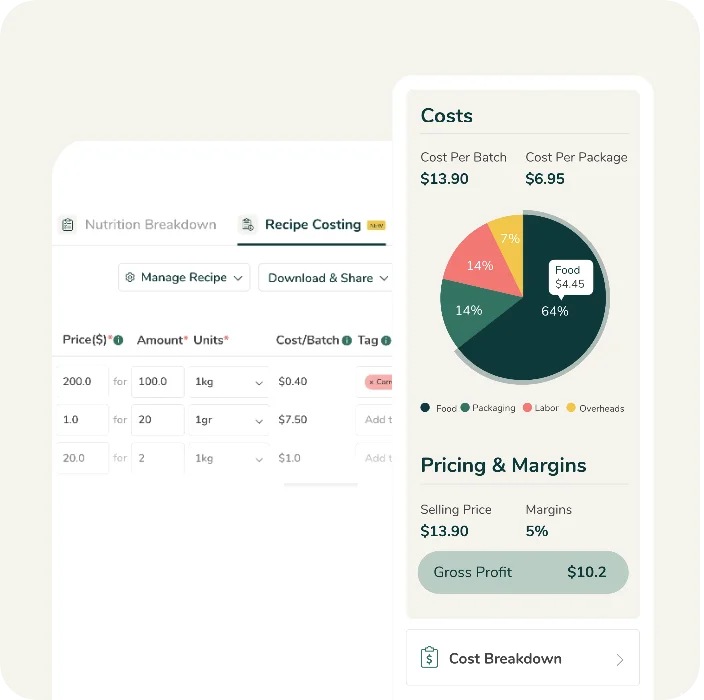
Recipe Costing
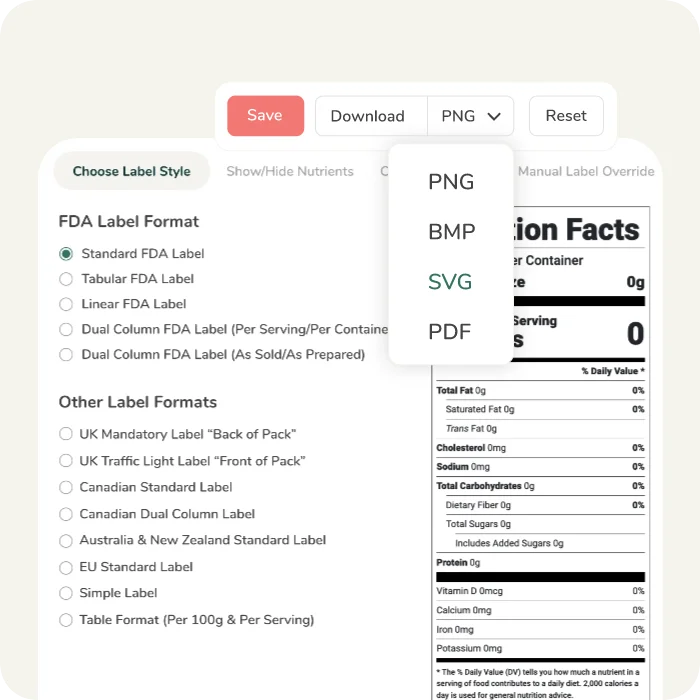
High Resolution Label Artwork exports
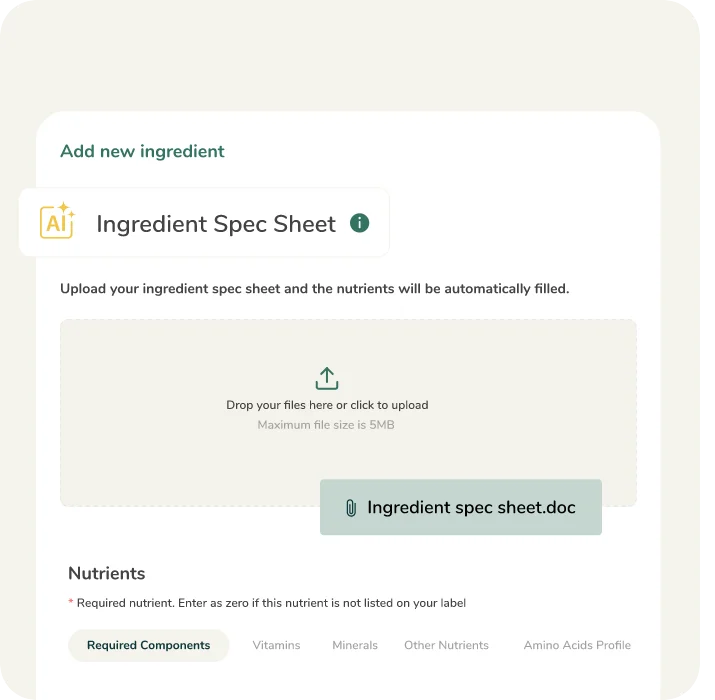
AI Enabled Spec Sheet Parsing
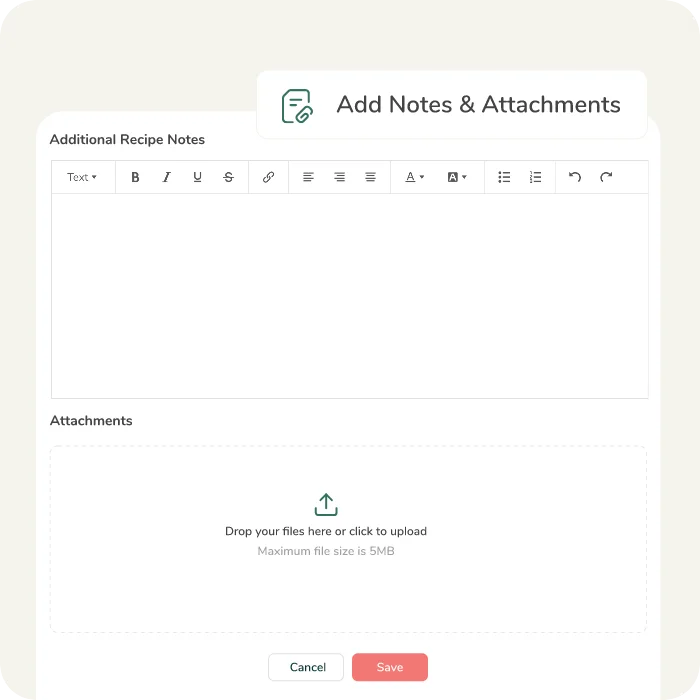
Notes & Attachments
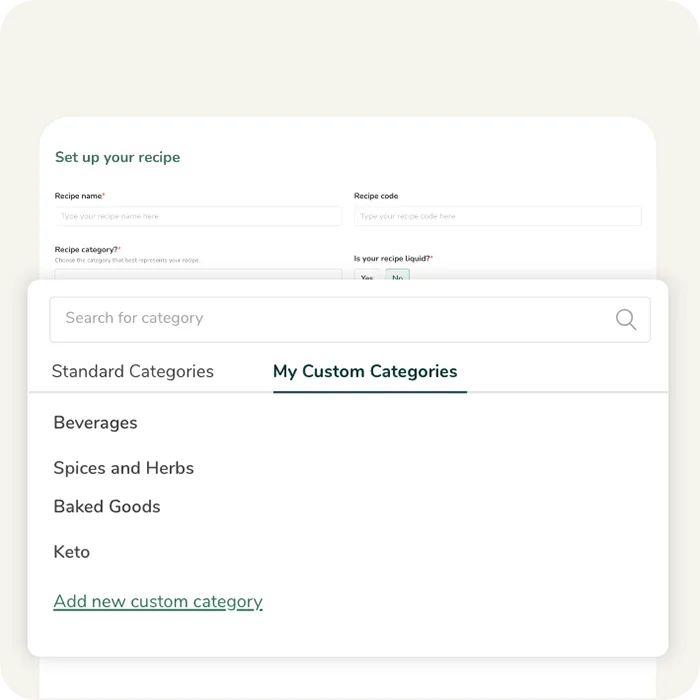
Custom Categories
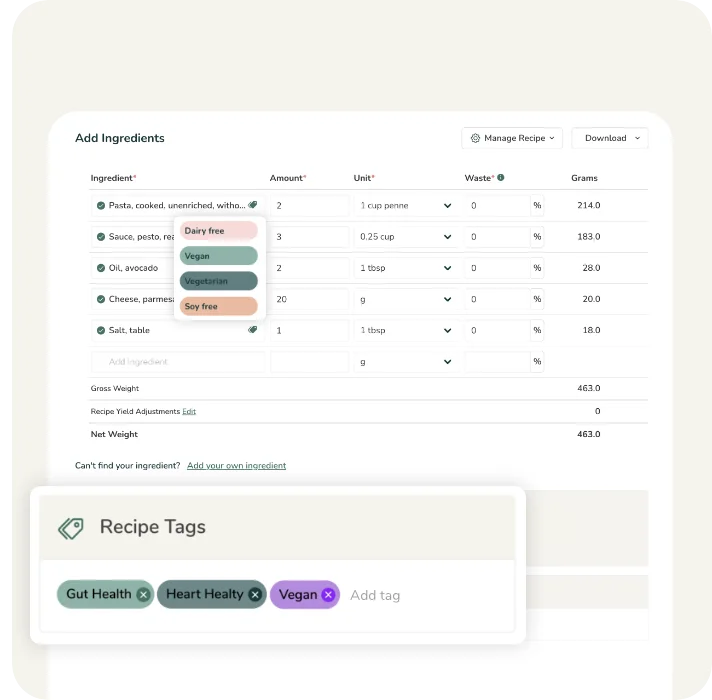
Ingredient & Recipe Tags
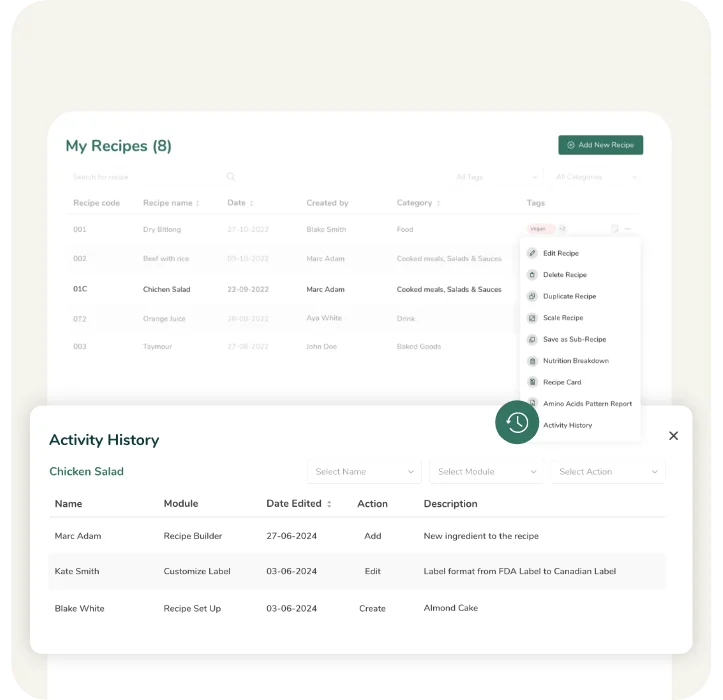
Ingredient & Recipe Activity History
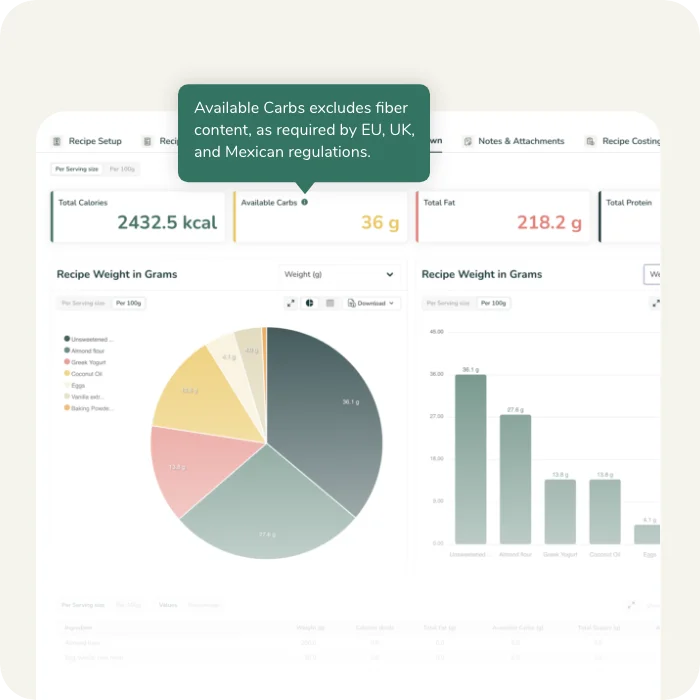
Available Carbohydrate Calculations
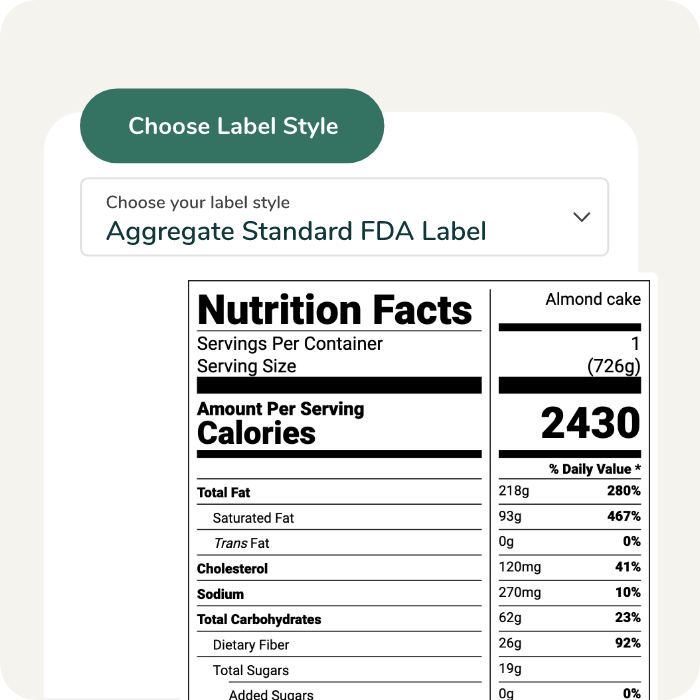
Aggregate Label Format
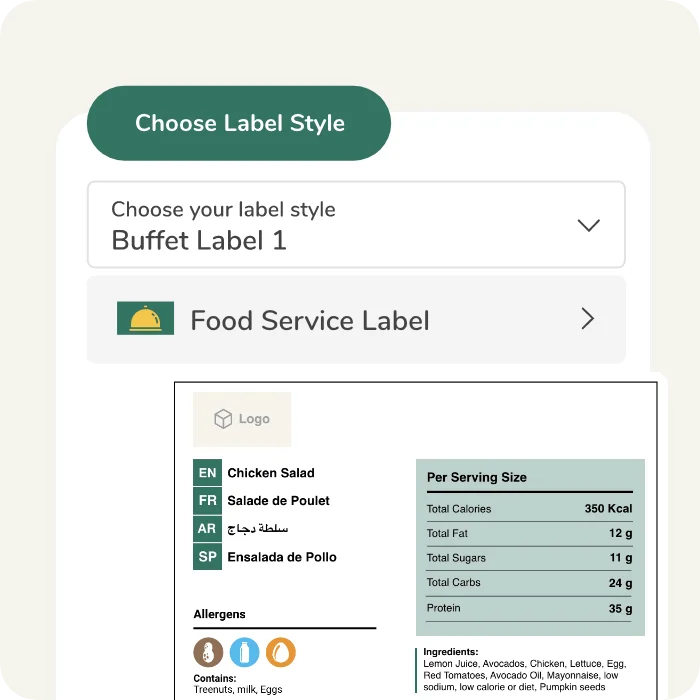
Buffet Label Format

Calculate %DV based on rounded or unrounded nutrient values.
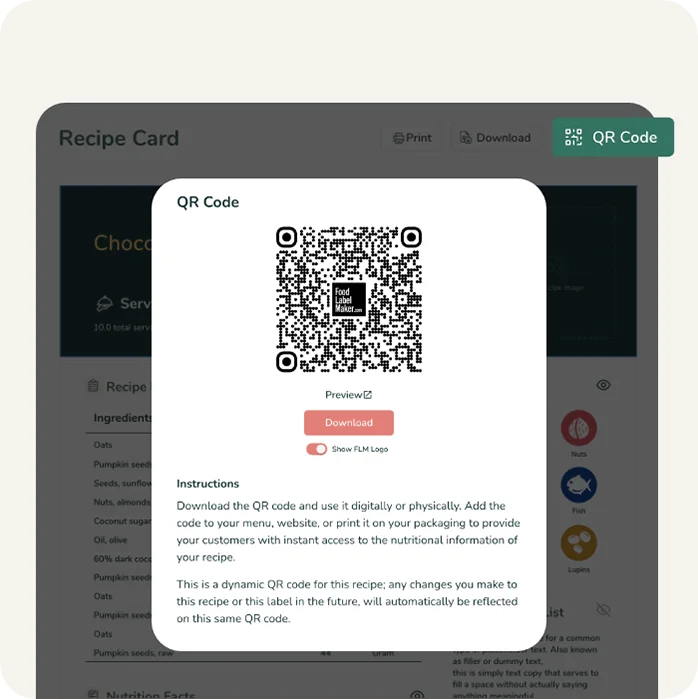
Share Your Recipe Card
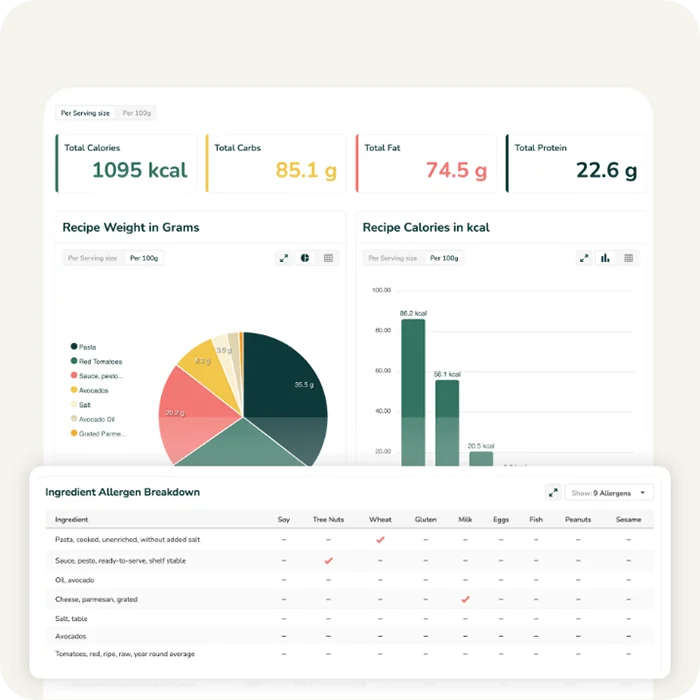
Allergen Breakdown Report
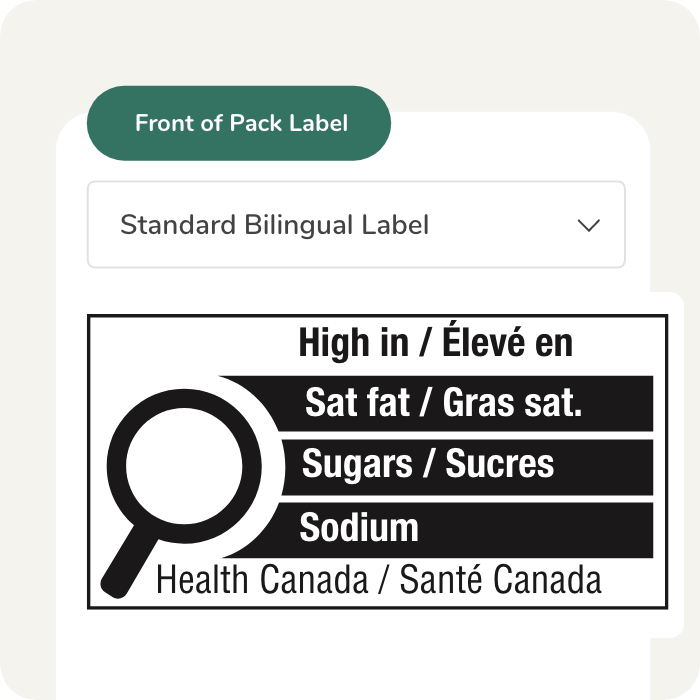
Canadian Front Of Pack Labelling
Go Further with our Pro Features

Recipe Yield Cooking Adjustments
Manually adjust your recipe yield to account for moisture loss due to cooking, drying, freezing…etc.

Sugar Alcohols Customization
Customize how you display Sugar Alcohol on your label if you are making a sugar alcohol-related claim.

Protein Quality Adjustment
Adjust your Protein quality score if you are making a protein related claim. Use Protein Digestibility Corrected Amino Acid Score (PDCAAS) to correct your protein daily value %.

Amino Acids Pattern Report
Compare your recipe’s Amino Acids pattern against the ideal Amino Acids Pattern as per the Report of Joint FAO/WHO Expert Consultation on Protien Quality Evaluation.
Tailor Your Account to Suit Your Needs

Custom API Integration
Tailor-made API calls to allow seamless integration of your platforms with our system, enhancing connectivity and efficiency.

Multi-seat subscriptions
Give your team access to the organization’s ingredients, recipes, and customizations with our multi-seat subscription.

Tailor Built Features & Reports
Build features, reports, customizations specifically to fit your team’s needs.

Hassle Free Data Migration
Relax as we handle the seamless migration of all your existing ingredient and recipe data into our tool, ensuring a smooth transition.
Nutrition Facts Label Making Process

FAQ
Yes, you can create your own nutrition declaration, but it must comply with the Retained EU Regulation 1169/2011 (FIC) and the UK Food Information Regulations. Your back-of-pack (BoP) label must list information in a specific order: Energy (both kJ and kcal), Fat, Saturates, Carbohydrate, Sugars, Protein, and Salt. Unlike US labels, all values must be provided per 100g or 100ml to allow for easy product comparison.
Using a professional label maker ensures that your “Salt” calculations (Sodium x 2.5) and energy conversions are accurate and formatted correctly for the UK market.
While the Food Standards Agency (FSA) sets the policy, the actual enforcement and “checking” of labels are carried out by Local Authority Trading Standards and Environmental Health Officers. They do not approve labels before they hit shelves; instead, they conduct market samples and audits. If your labels are found to be inaccurate for instance, if your salt levels are higher than declared you may face a compliance notice, fines, or a request to relabel your stock.
The UK uses a two-tier system for nutritional information:
- Mandatory Back-of-Pack (BoP): A tabular format (or linear if space is tight) providing the “Big 7” nutrients per 100g/ml.
- Voluntary Front-of-Pack (FoP) “Traffic Lights”: While not legally required for all, most major UK retailers demand this color-coded system. It uses Red (High), Amber (Medium), and Green (Low) to highlight Fat, Saturates, Sugars, and Salt, along with the calorie count per portion.
- Reference Intakes (RI): Labels typically include the percentage of an average adult’s “Reference Intake” (based on 2,000 kcal) provided by a serving.
- Salt, not Sodium: You must declare “Salt” on the label. Declaring “Sodium” alone is not compliant in the UK.
Verification in the UK follows a specific process to ensure “due diligence”:
- Per 100g/ml Calculation: All data must first be calculated per 100g or 100ml of the product as sold.
- Ingredient Analysis: Use verified databases (such as CoFID – Composition of Foods Integrated Dataset) to calculate the nutrient profile.
- Traffic Light Logic: If providing front-of-pack labels, you must verify your values against the FSA’s specific thresholds for Red, Amber, and Green.
- Allergen Highlighting: In the UK, the 14 mandatory allergens must be emphasized (usually in bold, italics, or a different color) within the ingredients list itself, rather than in a separate “Contains” box.
- Automatic kJ/kcal Conversion: Ensures your energy values are accurately represented in both units required by UK law.
- Traffic Light Generation: Automatically assigns the correct Red, Amber, or Green colors based on the UK government’s specific nutrient thresholds per 100g.
- Sodium to Salt Calculator: Eliminates manual errors by automatically converting sodium data into the mandatory “Salt” declaration.
- UK Formatting Templates: Provides the exact tabular layout and font size (minimum x-height of 1.2mm) required for UK compliance.
- Allergen Identification: Automatically identifies and bolds the 14 allergens specific to UK/EU regulations (including celery, mustard, and lupin)