The grace period is officially over. As of February 25, 2026, the transition period for Plain English Allergen Labelling (PEAL) has concluded. For food manufacturers in Australia and New Zealand, this means the “stock-in-trade” protections are gone. Every product sitting on a retail shelf today must now meet the strict new standards for naming and formatting allergens.
Under FSANZ Standard 1.2.3, allergen declaration is no longer just a matter of listing ingredients; it is a high-stakes safety requirement. Failing to use the prescribed “Required Names” or missing a bolding requirement makes food products non-compliant and leaves businesses vulnerable to mandatory recalls and regulatory action.
This guide is designed for Australia and New Zealand food manufacturers looking to take products to market, as well as US, Canadian, Mexican, or EU businesses expanding their reach into Australia and New Zealand. It breaks down the core requirements of Standard 1.2.3, the specific PEAL changes that must be implemented, and how to ensure your nutrition information panels are 100% market-compliant in 2026.
Ready to create your FSANZ nutrition label? Create your first one for free here.
Key Takeaways: 2026 PEAL Compliance at a Glance
If you only have 30 seconds, these are the critical requirements your labels must meet to be legal in Australia and New Zealand today:
- The Grace Period is Over: As of February 25, 2026, “stock-in-trade” protections have expired. Every product on a retail shelf in Australia and New Zealand must now be 100% PEAL-compliant.
- Mandatory “Required Names”: Generic terms are no longer permitted. You must use specific names from Schedule 9 (e.g., list Almond or Cashew instead of “Tree Nuts,” and specifically identify Fish, Crustacean, or Mollusc instead of “Seafood”).
- The Dual Bolding Rule: Allergens must be bolded in both the ingredient list and the mandatory summary statement. The bolding must provide a “distinct contrast” to the surrounding text.
- The “Contains” Summary Rule: Every packaged food (with an ingredient list) must have a summary statement that starts with the bolded word Contains (Capital ‘C’), sits in the same field of view as the ingredients, and uses the same font size and typeface.
- The Wheat/Gluten Distinction: This is a major compliance trap. You must declare wheat as the allergen and gluten as the protein. If a product contains wheat flour, the summary must state: Contains wheat, gluten.
- Processing Aids are Included: If an allergen is used as a processing aid or carry-over ingredient and remains in the final food, it must be declared using the full PEAL format.
- Warning vs. Advisory: Do not confuse these. Warning statements (e.g., Royal Jelly) have prescribed wording and 3mm font rules, while Advisory statements (e.g., Caffeine) must be “to the effect of” the specific risk.
What is FSANZ Standard 1.2.3? The Safety Requirement Explained
The scope of Standard 1.2.3 in the Food Standards Australia New Zealand (FSANZ) regulations is far more broad than just allergen information and labelling. It’s a comprehensive safety anchor that captures, and lists, any substance that could post physical or physiological harm to a consumer. Whether it be an allergic reaction, metabolic issue or caution for sensitive populations like children or pregnant women, the food standards code requires this information to be added to a nutrition information panel (NIP)
The 3 Categories of Mandatory Safety Information
To manage different labels of consumer risk, FSANZ have created 3 categories of mandatory safety information required on a food label. Whether or not a food product falls into a category depends entirely on the ingredient list.
Remember, this section of the food standards code is not strictly about allergens, it’s a wider scope of food safety and transparency for consumers ensuring that vulnerable individuals have the information they need to avoid potentially life-threatening or adverse health reactions.
1. Mandatory Warning Statements (The “Royal Jelly” Rule)
Mandatory warning statements are the highest tier of safety information. These are reserved for ingredients that pose a significant and immediate health risk to consumers – such as Royal Jelly. Royal Jelly is a viscous product of the beehive, secreted by worker honeybees. It’s considered a ‘superfood’ with numerous health benefits when consumed.
The darker side of this superfood is its ability to cause rapid, life-threatening anaphylaxis for people with food allergies. Given this, the FSANZ Code is extremely specific that wording for the warning statement cannot be paraphrased.
| Mandatory Warning Statement Exact Wording for Royal Jelly: “This product contains royal jelly which has been reported to cause severe allergic reactions and in rare cases, fatalities, especially in asthma and allergy sufferers.” |
| Legibility Requirements for Warning Statements A warning statement on a label must be written: In at least 1.5mm on small packages;Or, in at least 3 mm on all other packages |
2. Mandatory Advisory Statements (Caffeine, Aspartame, and Polyols)
Advisory statements come into play for food products that might pose a risk to consumers they’re unaware of. They’re not as strict, and don’t require exact legal wording like warning statements, but food manufacturers are still required to add a “statement to the effect” on food labels according to the FSANZ Code 1.2.3.
Common substances requiring these advisories include ingredients that affect metabolic conditions, digestive health, or sensitive populations such as children and pregnant women.
Mandatory Advisory Statement Examples:
According to standard 1.2.3 and schedule 9 of the Food Standards Code, “Statements to the effect” of these requirements must be provided for:
- Aspartame: Must state that the product “contains phenylalanine” to alert those with the rare genetic disorder phenylketonuria.
- Caffeine & Guarana: Formulated caffeinated beverages must state they contain caffeine and are “not recommended for children, pregnant or lactating women and individuals sensitive to caffeine”.
- Polyols (Lactitol, Maltitol, etc.): If present above a certain limit, a statement must warn that “excess consumption of the food may have a laxative effect”.
- Unpasteurised Egg or Milk: Products must clearly state they have “not been pasteurised”.
- Milk Substitutes: Beverages made from cereals or soy with low fat/protein must state they are “not suitable as a complete milk replacement for children under five”.
Legibility Requirements for Advisory Statements
While advisory statements do not have a prescribed minimum millimeter height like warning statements, they are still subject to strict general legibility laws:
- Prominence: Statements must be clear, prominent, and distinct from the background.
- Language: All essential safety information must be written in English.
- Placement: The information must be in full view of the purchaser.
3. Mandatory Allergen Declarations (PEAL)
Now for the most significant part of Standard 1.2.3 for most food businesses – the Plain English Allergen Labelling (PEAL) mandate. Following the February 2026 deadline, and in line with PEAL, allergens must now be declared using specific and simple names with a high-visibility format.
The goal of PEAL is consistency across food allergens. Before these rules, one brand might list “Casein,” another “Milk Solids,” and another “Dairy”, leaving the consumer to guess. Now, there is only one way to do it.
See How FoodLabelMaker Can Help You
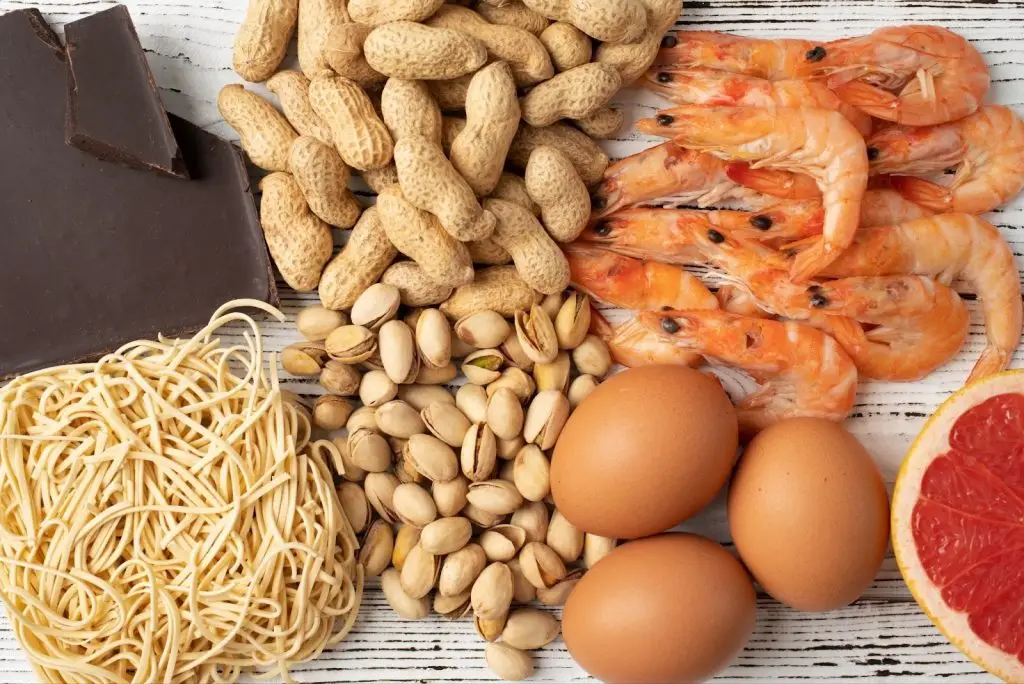
What are the 11 Mandatory Allergens & Their Required Names under PEAL?
Under PEAL, you must use the Required Names listed in Schedule 9 of the Code. These names must be used in both the ingredient list and the summary statement.
| Allergen Category | Required PEAL Allergen Name | What is no longer allowed? |
| Peanuts | Peanut | “Nuts” or “Groundnuts” |
| Tree Nuts | The specific nut: Almond, Brazil nut, Cashew, Hazelnut, Macadamia, Pecan, Pine nut, Pistachio, Walnut | The generic term “Tree nuts” |
| Cereals | Wheat, Barley, Oats, Rye | “Cereals containing gluten” |
| Milk | Milk | “Dairy” |
| Egg | Egg | “Albumin” (without saying egg) |
| Soy / Soybean | Soy, Soya, or Soybean | “Lecithin” (without the soy source) |
| Molluscs | Mollusc | Grouping under “Seafood” or “Fish” |
| Crustacea | Crustacean | “Shellfish” |
| Fish | Fish | “Seafood” |
| Lupin | Lupin | Generic “legumes” |
| Sulphites | Sulphites (if ≥ 10 mg/kg) | Preservative numbers alone |
Why are “Tree Nuts” Labelling no longer allowed under PEAL?
Under the 2026 PEAL requirements, “tree nuts” is officially banned from both the statement of ingredients and summary statement and the reason is simple: medical precision.
A consumer can be fatally allergic to Cashews but perfectly fine eating Almonds. By using a generic term like “Tree Nuts,” food manufacturers were unintentionally restricting the diets of allergic consumers or, worse, forcing them to guess which nuts were actually present.
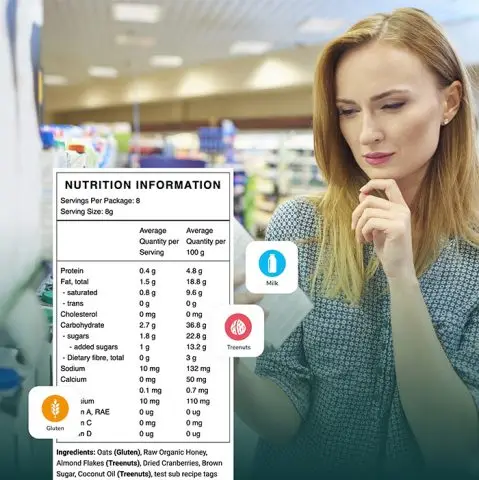
This means that if any of the 9 tree nuts (Almond, Brazil nut, Cashew, Hazelnut, Macadamia, Pecan, Pine nut, Pistachio, Walnut) are present in a food product, each individual nut must be listed even if your summary statement will become much longer. Take a look at the below examples for more clarification:
Ingredients List:
✅ Allowed: Cashew, Almonds, Pistachio
❌ Not Allowed: Mixed Nuts
Contains Statement:
✅ Allowed: Contains Macadamia, Pecan, Pine nut, Brazil nut
❌ Not Allowed: Contains: Mixed Nuts
Wheat vs. Gluten: What are the Correct PEAL Declarations for Cereals?
The distinction between wheat and gluten is the most common point of confusion in the 2026 PEAL standards. Under previous regulations, manufacturers often used the phrase “Cereals containing gluten.” This is now prohibited.
FSANZ now requires a dual-declaration system because wheat is a major allergen that can cause anaphylaxis, whereas gluten is a protein that triggers a different immune response (coeliac disease).
In the ingredients list, the required name must be used and in bold: wheat, barley, oats, rye.
In the “Contains” Summary Statement, it must reflect exactly what’s in the food product based on these 3 scenarios:
| If your product contains… | The Summary Statement must say… |
| Wheat (that contains gluten) | Contains wheat, gluten |
| Wheat (where gluten has been removed, e.g., glucose syrup) | Contains wheat |
| Barley, Oats, or Rye (which contain gluten) | Contains gluten |
Key Takeaway: If you have a product made with wheat flour, your summary statement must list both words: Contains wheat, gluten. If you only list “wheat,” you are non-compliant for failing to declare the gluten. If you only list “gluten,” you are non-compliant for failing to declare the wheat.
PEAL Formatting Requirements: Bold Font & “Contains” Statements
Once you have identified the allergens in your product and assigned them their Required Names, the next step is formatting. Under the 2026 PEAL rules shown in Standard Code 1.2.3-7, it is no longer enough to just list the allergen, it must be visually distinct so that consumers can find it at a glance.
Bold Font Requirements in PEAL Guidelines
Every time an allergen appears in the ingredient list, it must be printed in a bold font that provides a distinct contrast to the rest of the text.
- What to Bold: You must bold the Required Name itself.
- The “Separate Word” Rule: If the allergen is part of the ingredient name (e.g., Milk powder), the allergen must be bolded. If the allergen is not part of the name, it must be listed separately in brackets and bolded.
- Correct: Milk powder
- Correct: Sodium caseinate (milk)
- Incorrect: Sodium caseinate (The chemical name should not be bolded; only the allergen source should be).
“Contains” Summary Statement in PEAL Guidelines
For products required to have an ingredient list, a separate summary statement is now mandatory. This statement serves as a quick-reference safety check.
- Location: It must be in the same field of view as the ingredient list and placed directly next to it, usually immediately below.
- The Starting Word: It must commence with the word “Contains” (with a capital C and in bold).
- Formatting: The entire statement must be in bold and use the same typeface and font size as the allergens declared in the ingredient list.
- No Extra Words: The summary statement should only contain the required names of the allergens. Do not use colons, “and,” or extra descriptions.
- Correct: Contains milk, egg, wheat, gluten
- Incorrect: Contains: milk, egg, wheat and gluten.
Precautionary Allergen Labelling (PAL)
Statements like “May contain” or “May be present” are still voluntary under FSANZ; they are not part of the mandatory PEAL requirements. However, if you choose to include a PAL statement, it must be kept distinctly separate from the mandatory “Contains” statement.
| 💡 Labelling Compliance Tip: Mixing your “May contain” list with your mandatory “Contains” list is a common cause for nutrition label rejection. Keep them on separate lines to ensure there is no confusion between what is in the food and what might be there. |
What Food Products Are Exempt from Allergen Labelling?
Interestingly enough, not every ingredient derived from an allergen is legally required to be declared on a nutrition label. FSANZ recognizes that some high-level processing methods (like heavy refining and distillation) remove the allergenic protein thus thwarting an allergic reaction in consumers.
If an ingredient meets the specific safety criteria listed under the Food Standards Regulations, it is exempt from mandatory allergen declaration. This means you do not need to bold the ingredient in your list or include it in your “Contains” summary statement.
The exemptions include:
- Fully Refined Soybean Oil: To be exempt, the oil must have been degummed, neutralised, bleached, and deodorised. If it is unrefined or “cold-pressed,” it must still be declared as soy.
- Specific Soy Derivatives: Tocopherols (Vitamin E) and phytosterols derived from soybean oil distillates are exempt.
- Wheat-Derived Glucose Syrups: These are exempt from declaring wheat ONLY if:
- They have been refined to remove as much gluten as possible.
- The gluten content does not exceed 20 mg/kg.
- Distilled Alcohol: Spirits distilled from wheat or whey (milk) are exempt from declaring wheat or milk because the distillation process leaves the proteins behind.
- Isinglass: This clarifying agent derived from fish swim bladders is exempt when used in the production of beer and wine.
| ❗Manufacturer Warning: Just because an ingredient is exempt from allergen labelling doesn’t mean it is exempt from ingredient labelling. Food manufacturers still have to list “Glucose Syrup (Wheat)” if it doesn’t meet the 20mg/kg threshold, or simply “Glucose Syrup” if it does. |
Do Non-Packaged Foods Need Allergen Declarations? Allergen Requirements for Cafes, Bakeries & Restaurants
A common misconception is that if a food doesn’t have a printed label, the PEAL rules don’t apply. This is incorrect. The requirement to declare allergens is “mandatory for all food for sale,” regardless of whether it is in a box or on a cafe plate.
Any retail food service business (like a bakery, deli, or restaurant), must still comply with the 2026 PEAL standards in these three ways:
- Information on Request: Food businesses are required to provide the specific Required Names of allergens to any customer upon request. It is insufficient for staff to provide general statements such as “there are nuts in this”; they must be able to identify the specific type, such as almond, cashew, or walnut.
- Display Boards & Menus: When allergen information is displayed on menus or counter cards, it must follow PEAL naming conventions. Generic terms like “Seafood” are no longer compliant; instead, the specific category (fish, crustacean, or mollusc) must be identified.
- Vulnerable Populations: For non-packaged foods, businesses remain responsible for providing Mandatory Advisory Statements. For example, if unpasteurised juices or milk are sold, a sign must be displayed to communicate the potential health risk to consumers.

Final Thoughts and a 2026 FSANZ Allergen Compliance Checklist
The conclusion of the PEAL transition period on February 25, 2026, marks a significant shift in how food safety is communicated in Australia and New Zealand. Standard 1.2.3 is no longer a guideline to move toward; it is the current, enforceable law for every product on a retail shelf.
Whether it is distinguishing between wheat and gluten, identifying specific tree nuts, or ensuring that Royal Jelly warnings meet exact millimeter height requirements, there is no longer room for “approximate” labelling. For manufacturers, especially those entering the ANZ market from the US, EU, or Asia, understanding these nuances is the difference between a successful product launch and a costly regulatory failure.
Maintaining compliance in this environment requires constant vigilance and a robust understanding of the Food Standards Code. By adopting the “Required Names” and formatting standards outlined in this guide, businesses can ensure they provide the transparency consumers need while protecting themselves from the risks of non-compliance.
To ensure total compliance with Standard 1.2.3 and the PEAL requirements, every manufacturer or importer should conduct a final audit of their packaging. As of February 2026, any “No” answer in the following criteria indicates a product is at high risk for mandatory recall and regulatory penalties.
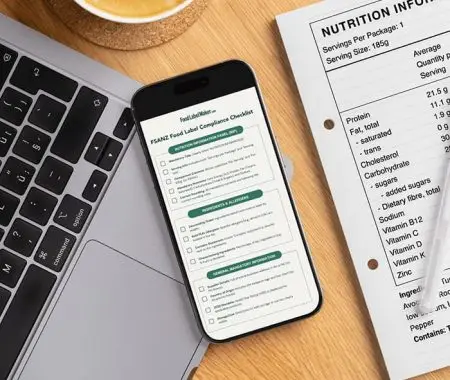
Download our Comprehensive 2026 PEAL Compliance Checklist PDF to use during your next label audit.
Frequently Asked Questions About Allergen Labelling for Australia & New Zealand Nutrition Labels
1. Is the “May Contain” statement now mandatory, and does it need to be bolded?
No. Precautionary Allergen Labelling (PAL), such as “May contain” or “May be present,” remains voluntary under the FSANZ Code. Because these statements are not part of the mandatory PEAL requirements, they do not have a legal requirement to be bolded.
In fact, the FSANZ Compendium suggests that manufacturers should keep PAL statements distinct from the mandatory “Contains” summary statement. Many businesses choose not to bold “May contain” statements to ensure they do not compete visually with the mandatory safety declarations, helping consumers distinguish between a confirmed allergen and a potential cross-contact risk.
Ready to create your FSANZ nutrition label? Create your first one for free here.
2. Do processing aids need to be declared?
Yes. If a processing aid is derived from a mandatory allergen, and the allergenic protein remains in the final food, it must be declared. For example, if a wheat-based dusting is used on a conveyor belt, wheat must be declared in the ingredient list and the summary statement.
Explore the Food Label Maker dashboard and create your first nutrition label for free.
3. What happens if a product is found to be non-compliant due to incorrect allergen labelling?
Failure to meet PEAL requirements is a breach of the Food Standards Code. This can result in mandatory food recalls, significant fines from state-based health authorities (such as the NSW Food Authority or MPI in NZ), and potential legal liability if a consumer suffers an allergic reaction due to incorrect labelling.
If you need help ensuring your FSANZ label is compliant, hire one of our FSANZ regulatory experts – with over 20 years of experience, they can create a fully compliant nutrition label for you in 1-3 days.
4. Why must “wheat” and “gluten” be listed separately in the summary statement?
This is to assist two different medical groups. Individuals with a wheat allergy need to know if any wheat protein is present (which can cause anaphylaxis), regardless of gluten content. Individuals with coeliac disease need to know if any gluten is present from wheat, barley, oats, or rye. If a product contains wheat-based flour, it must list both: Contains wheat, gluten.
To ensure your FSANZ label is compliant, have one of our regulatory experts take a look and create it for you – hire an FSANZ expert here.
5. Can products labelled before 2024 still be sold?
No. The “stock-in-trade” period officially ended on February 25, 2026. While there was previously a grace period for products manufactured and labelled before the 2024 transition, that protection has now expired. Every food product currently available for retail sale in Australia and New Zealand must now be 100% compliant with PEAL naming and formatting standards. Non-compliant stock should be removed from shelves to avoid regulatory action.
To get started, create a free label or view our pricing plans.

Related Posts